First, what minoxidil is
Minoxidil is a medicine that helps hair grow. The topical version, sold under the brand name Rogaine and as generics, is approved by the FDA (the U.S. Food and Drug Administration) for male and female pattern hair loss. It comes as a liquid or foam you put on the scalp.
There is also a low-dose oral tablet. Oral minoxidil was originally approved as a blood pressure medicine. Doctors now prescribe it off-label in very small doses for hair loss, and studies show it works well for many people.
Minoxidil does not block the hormones that cause hair loss. Instead, it seems to widen blood vessels around the follicle and push follicles into their growth phase. That last part is exactly why shedding happens.
How hair grows and rests
Every hair on your head cycles through three phases. Anagen is the growth phase, which can last several years. Catagen is a short transition. Telogen is the resting phase, which lasts about three months. At the end of telogen, the old hair falls out and a new one starts growing in the same follicle.
At any moment, about 85 to 90 percent of your hairs are growing and about 10 percent are resting. Losing 50 to 100 hairs a day is normal; those are resting hairs reaching the end of their cycle.
Why minoxidil makes hair fall out at first
Minoxidil tells resting follicles to wake up and start a new growth phase early. But a follicle can only hold one hair at a time. To grow a new hair, it has to push out the old resting hair first.
So in the first few weeks, hundreds of follicles release their old hairs at once instead of spread out over months. That shows up as a sudden increase in hair in your brush, shower drain, or pillow. Dermatologists call this telogen effluvium, or just minoxidil shedding.
Here is the key point. The hairs you are losing were already on their way out. They were dying resting hairs. Minoxidil did not kill them. It just moved up the timeline so a new, hopefully thicker hair could replace each one.
When shedding starts and stops
Shedding usually begins two to eight weeks after you start minoxidil. It peaks around week four to six and tapers off by week eight to twelve. Some people barely notice it. Others see a clear thinning that can be upsetting.
New hairs take time to grow long enough to see. Most people need four to six months of daily use before they notice improvement, and the full effect can take a year. This is why dermatologists ask you to commit to at least six months before judging results.
If shedding lasts more than three or four months, or keeps getting worse instead of settling, talk to a clinician. Something else may be going on, such as low iron, thyroid problems, or stress-related hair loss.
What you should not do
Do not stop minoxidil because of shedding. If you quit, the follicles you woke up will go back to resting, and you will lose the new growth too. You will end up where you started, or slightly behind.
Do not double your dose to speed things up. More minoxidil does not shorten the shed, and it raises the risk of side effects like scalp irritation, headache, or, with oral minoxidil, unwanted body hair and swelling in the ankles.
Do not start and stop. Consistency matters more than anything else with this medicine.
Pairing minoxidil with finasteride
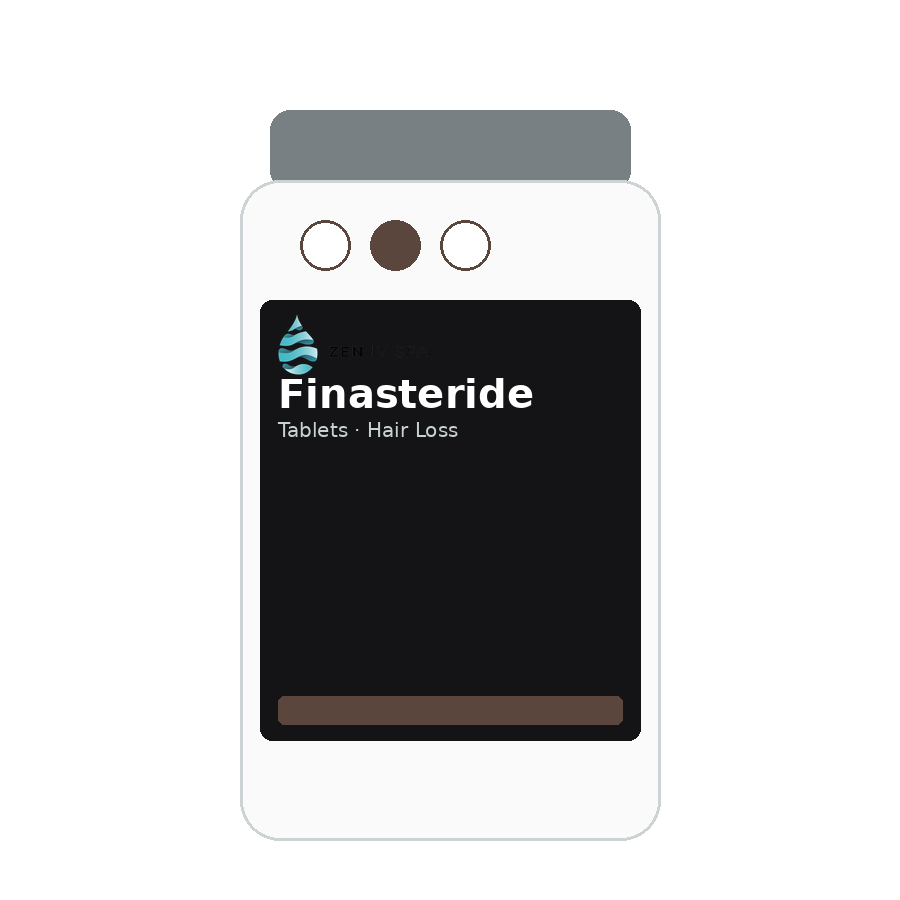
Minoxidil grows hair, but it does not stop the hormone that shrinks follicles in male pattern baldness. That hormone is DHT. Finasteride is a daily pill that blocks DHT production. Clinical trials show it slows or stops hair loss in most men who take it.
Many clinicians recommend using both together: finasteride to protect what you have, minoxidil to regrow what you lost. Zen IV Spa offers finasteride for $49 a month, oral minoxidil for $59, a topical spray for $69, or a full hair program that combines them for $149. Everything is prescribed after a video visit and shipped to your home in New York and New Jersey.
Where to go from here
If you are a few weeks into minoxidil and watching your hair fall, hang in there. If you are thinking about starting, or want to add finasteride, visit the Zen IV Spa hair loss page at /hair-loss/ to see the options. Book a free video visit at https://zenivspa.zenoti.com/webstoreNew/services or call (332) 239-2005.
Common Questions
Does everyone shed on minoxidil?+
No. Some people shed a lot, some a little, some not at all. Not shedding does not mean the medicine is not working.
How long does minoxidil shedding last?+
It usually starts two to eight weeks in and settles by week eight to twelve. If it continues past three or four months, see a clinician.
Does oral minoxidil cause shedding too?+
Yes. The mechanism is the same. Oral minoxidil can cause a similar early shed.
Will I lose more hair than I regrow?+
In most people, no. The shed hairs were resting hairs that were going to fall out anyway, and they are replaced by new growth over the following months.
Should I stop if the shedding scares me?+
Stopping will cause you to lose the new growth as well. If you are worried, talk to a clinician before quitting.
Does finasteride cause shedding?+
A small early shed can happen with finasteride too, but it is less common and less noticeable than with minoxidil.
Sources: FDA label for Rogaine (minoxidil topical solution and foam); Suchonwanit et al., Minoxidil and its use in hair disorders, Drug Design, Development and Therapy 2019; American Academy of Dermatology patient information on hair loss treatments.
All treatments are medical services. Every guest is screened, and every treatment is prescribed by a licensed provider. Nothing on this page is medical advice for you personally, and the opinions summarized here belong to the doctors named, not to Zen IV Spa. Talk to a provider before starting or stopping anything.