Read this first
Every program at Zen IV Spa is prescribed by a licensed provider after a free video visit. That visit is how we decide whether a medication is safe for you.
This page tells you what to expect and what to do if something feels off. It does not replace advice from your own provider. If you are ever unsure, call or text us at (332) 239-2005.
How we screen you before anything is prescribed
- Intake. You fill out a health history online: medications, supplements, allergies, surgeries, and conditions in your family. Please be complete.
- Video visit. A licensed provider reviews your intake with you and asks follow-up questions. It is free and takes about fifteen minutes.
- Labs where needed. For some programs, such as hormone care, your provider will ask for bloodwork first. A nurse can draw labs at your home in NY & NJ (labs at home).
We will not treat you if the risk is clearly higher than the benefit: people who are pregnant, breastfeeding or trying to conceive, anyone under 18, anyone with active cancer for peptide or hormone programs, anyone with a history of medullary thyroid cancer or MEN 2 for GLP-1 medications, and anyone who needs care we cannot safely give at home. If we say no, we will tell you why.
GLP-1 medications: semaglutide, tirzepatide, retatrutide, liraglutide
GLP-1 medications slow digestion and reduce appetite, which is why most side effects show up in the stomach.
Common side effects
- Nausea, especially in the first weeks and after a dose increase
- Constipation, or sometimes diarrhea
- Acid reflux, burping and bloating
- Tiredness or low energy while your body adjusts
- Mild injection-site redness or soreness
Most of these fade as your body settles in. Smaller meals, more water, more fiber and slow dose increases help. See our guide on managing stomach side effects (read our guide). If you cannot eat or drink normally, tell your provider; we can slow the schedule.
Serious warnings, in plain words
- Pancreatitis. Severe, steady pain in the upper belly that may spread to your back, often with vomiting. Stop the medication and seek care right away.
- Gallbladder problems. Pain in the upper right belly, fever, yellowing of the skin or eyes, or pale stools. Call your provider the same day.
- Thyroid C-cell tumors. In animal studies these medications caused thyroid C-cell tumors. It is not known whether this happens in people. Because of that, we do not prescribe GLP-1 medications to anyone with a personal or family history of medullary thyroid cancer or a condition called MEN 2. A lump in the neck, trouble swallowing or hoarseness should be checked promptly.
- Low blood sugar. The risk is higher if you also take insulin or a sulfonylurea. Shakiness, sweating, confusion or a racing heart are warning signs. Tell your provider about every diabetes medication you take.
- Pregnancy. These medications are not used during pregnancy or breastfeeding, and should be stopped well before trying to conceive. Talk to your provider about timing.
- Type 1 diabetes. These programs are for weight management and are not a substitute for insulin. We do not prescribe them for type 1 diabetes.
- Eating disorders. If you have a history of anorexia, bulimia or binge eating, tell your provider. Appetite medications can make these worse.
Brand-name semaglutide and tirzepatide are FDA-approved. Compounded versions, including the ones we prescribe, are not FDA-approved. More on that below.
Peptides: BPC-157, TB-500, CJC-1295/Ipamorelin, sermorelin, tesamorelin, GHK-Cu, PT-141, NAD+
Most people tolerate peptides well. Side effects are usually mild and short-lived.
Typical side effects
- Injection-site redness, soreness, itching or a small bruise
- Flushing or warmth, most often with NAD+ and PT-141
- Headache or lightheadedness in the first few days
- Water retention or puffiness with growth-hormone peptides such as CJC-1295/Ipamorelin, sermorelin and tesamorelin
- Nausea with PT-141, sometimes with a temporary rise or drop in blood pressure
- Mild skin sensitivity with GHK-Cu
What the evidence does and does not say
Semaglutide, tirzepatide and tesamorelin have been through large human trials. Many other peptides, including BPC-157 and TB-500, are supported mostly by animal studies and small early human research. Long-term safety data in people is limited. Your provider will tell you what is known for the peptide you are considering so you can make an informed choice.
Who should avoid peptides
- Anyone with active cancer. Several peptides encourage cell growth and repair, and we do not want to encourage the wrong cells.
- Anyone who is pregnant, breastfeeding or trying to conceive
- Anyone with an uncontrolled condition such as poorly managed diabetes, uncontrolled high blood pressure, or an active autoimmune flare, until it is under control
- GHK-Cu is not used in people with Wilson's disease or copper sensitivity
IV therapy and injections at home
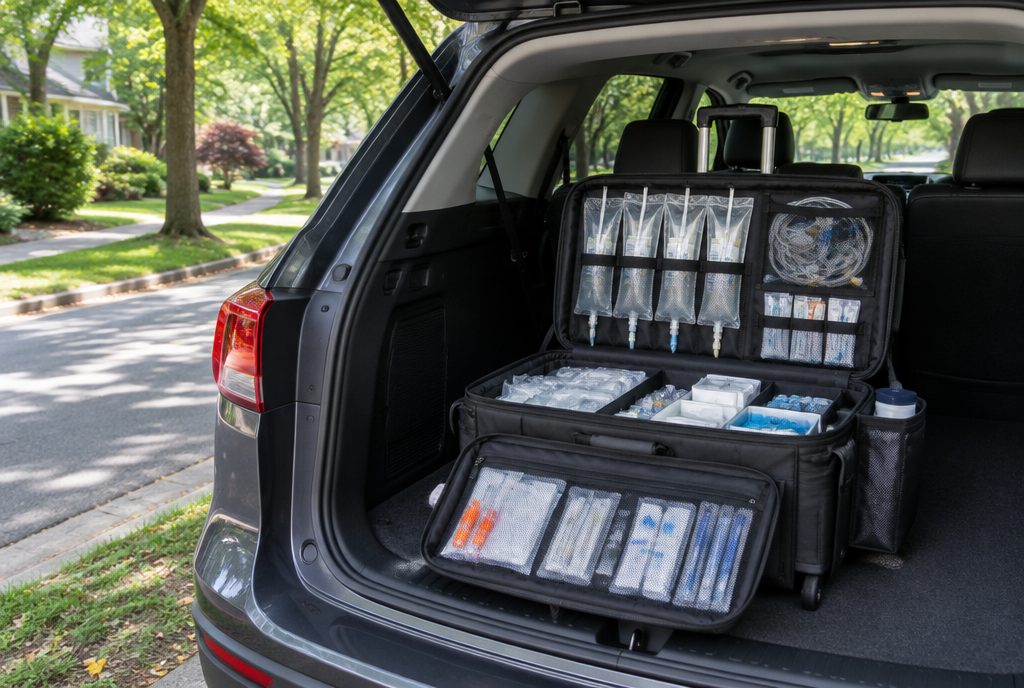
A nurse comes to your home for IV drips, shots and lab draws across New York and New Jersey, 8AM to 11PM, seven days a week. Before every infusion the nurse checks your vitals and health history. If anything looks wrong, the infusion does not start.
What is common
- A cool feeling up the arm as the drip runs
- Mild vein irritation or a small bruise where the needle went in
- A metallic taste or mild flushing with vitamin-heavy drips
What is rare
- An allergic reaction: hives, itching, swelling of the face or lips, wheezing or trouble breathing. Our nurses carry emergency supplies, including medication for allergic reactions, and are trained to respond and call for help.
- Infection at the IV site: spreading redness, warmth or pus a day or more later. Call us if you see this.
NAD+ infusions
NAD+ commonly causes noticeable sensations: flushing, chest tightness, a queasy stomach or muscle cramps. These are not usually dangerous, but they are uncomfortable. We run NAD+ slowly over a longer visit, and the nurse slows the drip the moment you feel anything. That almost always settles it.
Hormone programs: testosterone, enclomiphene, BHRT
Hormone care is prescribed only after bloodwork and monitored with bloodwork: labs before you start, again a few months in, then on a regular schedule to check hormone levels, red blood cell count, liver markers and, for men, prostate markers.
Testosterone can raise red blood cell counts, affect fertility, cause acne or fluid retention, and worsen sleep apnea. Enclomiphene can cause headaches, mood changes or vision changes; report vision changes right away. BHRT for women carries risks that depend on your age and history, which your provider will review with you.
Do not stop or change a hormone dose on your own. Tell us about chest pain, leg swelling, severe headaches or sudden vision changes.
Medication interactions: what to tell your provider
Before your video visit, list every prescription, over-the-counter medicine, vitamin and supplement you take. Then make sure to mention:
- Insulin or any other diabetes medication
- Blood thinners, because they raise bruising and bleeding risk with injections
- Thyroid medication, especially with GLP-1 programs
- Steroids, immune-suppressing drugs or chemotherapy, now or in the past
- Alcohol and recreational drug use. We are not here to judge; we need to know.
Also tell us about upcoming surgery. Some medications need to be paused beforehand.
When to stop and call 911, and when to call us
Call 911 or go to the nearest emergency room if you have:
- Trouble breathing, wheezing, or swelling of the face, lips, tongue or throat
- Chest pain or pressure that does not pass
- Severe belly pain that will not let up, with or without vomiting
- Fainting, confusion, or a seizure
- Blood sugar that is very low and not coming up with food or sugar
In an emergency, call 911 first. Let us know afterward so we can update your record.
Call or text us at (332) 239-2005 if you have:
- Nausea, constipation or reflux that is not improving with the usual steps
- Vomiting or diarrhea lasting more than a day
- Redness, warmth or swelling at an injection or IV site that is spreading
- A new medication from another doctor, or a change in your health
- Any question about your dose, your vial or your schedule
We answer 8AM to 11PM, seven days a week, and reply to overnight messages first thing in the morning.
How to report a side effect to us
Call or text (332) 239-2005 and tell us three things: what you felt, when it started, and what you had taken and when. A photo of a rash or injection site helps. We log every report, your provider reviews it, and we follow up with you.
If a side effect is serious, we report it to the compounding pharmacy and, where appropriate, to the FDA's MedWatch program. Reporting helps us, and it helps the next patient.
Compounded medications and FDA status, honestly
Many of the medications we prescribe are compounded: a licensed pharmacy prepares them to your prescription rather than selling a mass-produced brand product. Our partners are FDA-registered 503A pharmacies in the United States.
Compounded medications are legal when prescribed by a licensed provider. They are not FDA-approved, because the FDA approves finished brand products, not pharmacy preparations. Brand-name semaglutide and tirzepatide are FDA-approved; compounded versions are not. Peptides such as BPC-157 have no FDA-approved form at all, and their compounding status can change as FDA rules change.
We will never call a compounded peptide FDA-approved. What we can tell you is where it was made, that a licensed provider in your state prescribed it for you, and that a certificate of analysis is available on request (Quality & Testing).
Common Questions
Will I get side effects for sure?+
No. Many people have none or only mild ones. They are most likely in the first weeks and after a dose increase, and most settle as your body adjusts.
What if I feel sick after a dose increase on a GLP-1?+
Tell us. We can hold the current dose longer or step back down. Slow increases are normal and do not mean the program is failing. Our guide on nausea, constipation and reflux (read our guide) has practical tips.
Are peptides safe?+
Most are well tolerated and the common side effects are mild. The caveat is that long-term human data is limited for many of them. That is why we screen first, prescribe through a licensed provider, and check in with you along the way.
Why do you ask so many questions at intake?+
Because a condition or medication you do not mention can turn a safe program into a risky one. There is no wrong answer, and nothing you tell us is shared outside your care team.
Does the nurse bring emergency supplies to home IV visits?+
Yes. Every nurse carries supplies to handle an allergic reaction and is trained to respond and call for emergency help.
Can I take my program if I get pregnant?+
Stop and call us the same day. GLP-1 medications, peptides and hormone programs are not used during pregnancy or breastfeeding. Your provider will help you stop safely.
Is anything you prescribe FDA-approved?+
Brand-name medications are. Compounded semaglutide, tirzepatide and peptides are not FDA-approved. They are prescribed by a licensed provider and prepared by FDA-registered 503A pharmacies, and we say so plainly.
All treatments are medical services. Every guest is screened, and every treatment is prescribed by a licensed provider. Nothing on this page is medical advice for you personally or a promise of results.