Why it matters
The reason is usually time, and the cost of that never shows up as a line on a benefits statement.
Why employees put off their physicals
Look at what one routine physical asks of an employee:
- Find a provider who takes the plan and is reasonably close.
- Get an appointment, which can mean waiting weeks or taking whatever slot is open.
- Leave work, travel, wait, and be seen.
- Go to a lab on a different day for blood work.
- Chase the results, work out what they mean, and book any follow-up or referral.
Each step is manageable. Together they add up to several hours and a lot of coordination. For people with long shifts, children, or little control over their workday, the appointment keeps sliding to next month.
Remote employees and people who travel for work often have it harder, because they may not have a regular provider near where they are.
About a quarter of American adults have no primary care provider at all, and the share is higher among younger workers.
This is an access problem more than a motivation problem. A company can offer good coverage and still see low use, because using the coverage costs the employee half a day.
What it costs the company
Time away from work. A physical, a separate lab visit and any follow-up each take a block out of the workday. The interruption includes travel and waiting as well as the visit.
Missed chances to find problems early. The conditions that drive most health costs give no warning:
- High blood pressure. Nearly half of US adults have it, and only about 1 in 4 of them has it under control.
- Prediabetes. About 1 in 3 adults has it, and more than 8 in 10 of those do not know.
- Diabetes. About 1 in 5 adults with diabetes is undiagnosed.
- High cholesterol. It causes no symptoms until it causes a heart attack or stroke.
A checkup is where these are found. Screening does not guarantee a problem will be prevented, and not every employee needs every test every year. It does create the opportunity to act while the options are simple and inexpensive.
Absence and reduced output. Employees who are unwell either miss work or work at less than full capacity. The CDC Foundation estimated that productivity lost to worker illness and injury costs US employers about $225.8 billion a year, or roughly $1,685 per employee. That figure covers all illness and injury. It is not the cost of skipped physicals, and it is not what a physical program would save.
Premiums. The average annual premium for employer-sponsored family coverage was $25,572 in 2024, and employers paid most of it. About 90% of US health spending goes to people with chronic and mental health conditions, according to the CDC.
The numbers per employee
A 2015 study in The American Journal of Managed Care measured what a routine medical visit takes. The average visit used 121 minutes: about 37 minutes of travel and 84 minutes at the clinic. Only about 20 of those minutes were spent face to face with the physician. The researchers put the value of the patient's lost time at $43 per visit, in 2015 dollars.
An employee who needs a physical and a separate lab visit makes two trips:
- Physical: about 121 minutes
- Lab visit: about 121 minutes
- Total: about 242 minutes, just over four hours, or about $86 in lost time
Example: a company with 50 employees
| Measure | Estimate |
|---|---|
| Time away for physicals and separate lab visits | about 200 hours |
| Value of that lost time | about $4,300 |
| Yearly productivity lost to illness and injury | about $84,250 |
The first two rows are the time cost of doing physicals the usual way. The third row is the wider cost of illness and injury across that workforce, taken from the CDC Foundation figure. It is not what the company would save by offering physicals.
What the research says checkups do
Employers should hear both sides of the evidence.
What checkups achieve. A 2021 review in JAMA covering 32 studies found that general health checks were associated with more diagnoses of chronic conditions such as hypertension and depression, better control of blood pressure and cholesterol, higher uptake of screenings and vaccinations, and better patient-reported health.
What they have not been shown to do. A 2019 Cochrane review of 17 trials found that general health checks did not reduce deaths from any cause, from heart disease or from cancer over the periods studied.
What broad wellness programs achieve. Two large randomized trials, one at a national warehouse retailer and one at a university, found that workplace wellness programs changed some self-reported health behaviors but did not lower health care spending or improve clinical measures within about 18 months.
The fair conclusion: physicals find and control disease that would otherwise go unnoticed, and employees value them. Savings in the first year or two should not be promised. The case rests on earlier detection, better-controlled risk factors and time given back to employees.
What changes when the physical comes to the employee
The simplest fix is to remove the steps. When a provider comes to the office or to the employee's home:
- Scheduling is handled for the employee. No search for a provider, no phone tag.
- The visit happens where the employee is. At the office between meetings, or at home.
- Blood work is done at the same visit. A nurse draws it on the spot, so there is no second trip to a lab.
- Results are explained. A licensed provider goes through them with the employee in private.
- There is a next step. A prescription or a referral where one is needed, and a copy of the results for the employee's own doctor.
Two trips and four hours become one visit of about 15 to 30 minutes on site, plus a short results call. Flu vaccination shows how much location matters: studies consistently find higher vaccination rates when the vaccine is offered at work.
Annual physicals and executive physicals
Not every employee needs the same depth of care.
An annual physical is the foundation for the whole workforce. It covers medical history, vital signs, an exam, and the screenings that fit the person's age and risks.
An executive physical is a far more detailed assessment, with broad lab panels, added testing and a written health plan. Companies commonly offer it to senior leaders, whose schedules make coordinating several appointments especially hard.
Many employers offer both: annual physicals for everyone, and executive physicals for the leadership team. See our Executive Physical.
Where physicals fit in a wellness benefit
A physical is a starting point. Once employees have a relationship with a provider, a company can add:
- Health assessments with expanded blood testing
- Doctor house calls and video visits for everyday illness
- Flu shots at the office each fall
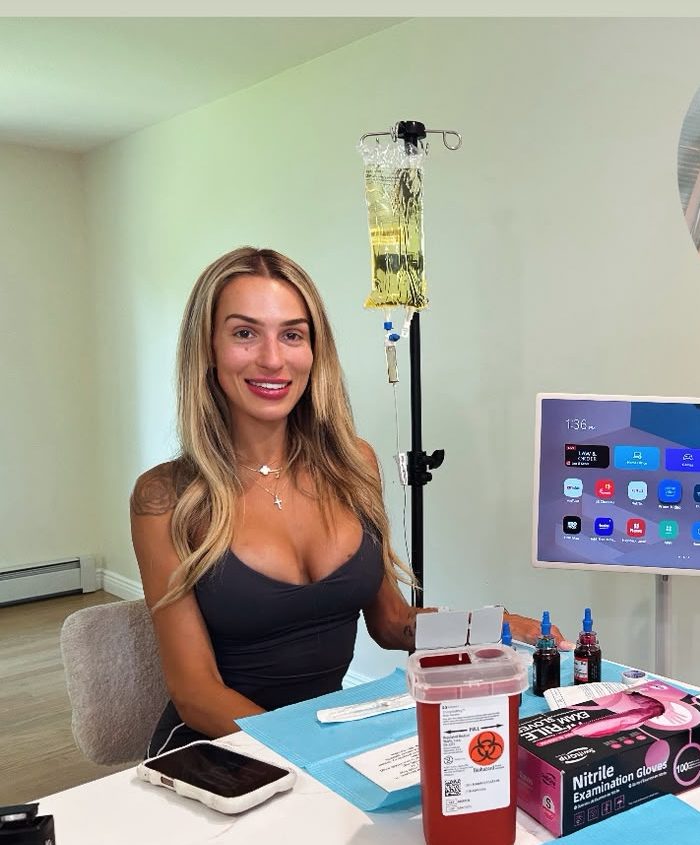
- On-site wellness days, including IV hydration
- Company-sponsored memberships for ongoing care
For self-insured employers, who pay their employees' claims directly, finding risks early and getting people into care is part of managing costs over time.
Our corporate wellness programs start at $299 per member per month. The final price depends on the number of employees, the services chosen and the length of the commitment.
Privacy and the rules
Three points apply to any employer program. Participation must be voluntary. Individual results go to the employee and the clinical team, and the employer receives only combined, anonymous figures. And the program must be designed to comply with HIPAA, the Americans with Disabilities Act and the Genetic Information Nondiscrimination Act. Have your benefits counsel review the design before launch.
Five questions to ask before adding physicals to your benefits
- Can you cover employees in every location we have? A program that serves headquarters and leaves out other sites creates an uneven benefit.
- Do you offer both at-home and on-site visits? Some employees prefer the office and some prefer home.
- What happens after the physical? Ask how employees get results, understand them, and reach prescriptions, referrals or further testing.
- How does this fit with our health plan? Find out what is included, what costs extra, and how it works alongside existing coverage.
- Can the program grow with us? What works for 25 people should work for 250.
How Zen IV Spa does it
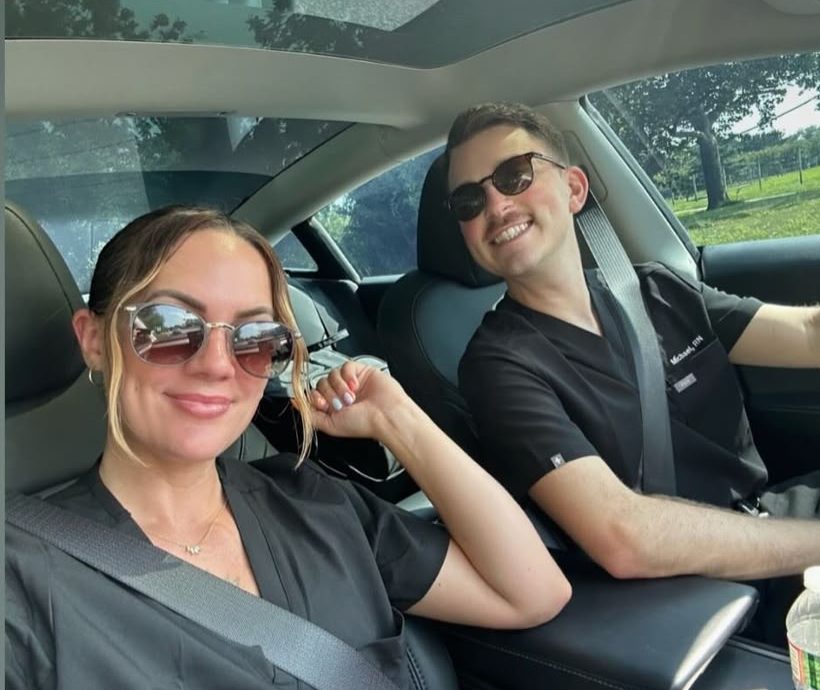
We come to offices and homes anywhere in New York & New Jersey. Licensed nurses take measurements and draw blood on site. A licensed provider reviews each employee's results privately. We also provide flu shots, wellness days with IV hydration, and executive physicals for leadership teams, which can be completed at the office in one day. Our medical director oversees every service.
See our corporate wellness page.
Quick answers
Are employee physicals covered by health insurance? Most employer plans cover a yearly preventive physical at no extra cost with an in-network provider. Added testing or care for an existing problem may be billed separately. We do not bill insurance; a company pays us directly for an on-site program.
Can physicals be done at the office? Yes. We bring the nurse and the provider to your workplace. Remote employees can be seen at home.
What is included in an employee physical? A review of medical history, an exam, vital signs such as blood pressure, and the screenings that fit the person's age and risk, such as blood sugar and cholesterol.
How is an executive physical different? It is longer and far broader, with expanded lab panels, added testing and a written plan. Many companies offer it to leadership and a standard physical to everyone else.
Do you cover remote or multi-state teams? We cover every county in New York and New Jersey, at home or at the office. We do not serve other states.
Do annual physicals reduce deaths? Trials have not shown that. They do increase the diagnosis and control of conditions such as high blood pressure.
Will a program lower our premiums next year? That should not be promised. Large trials found no reduction in spending within 18 months.
Does the employer see individual results? No. Individual results are private. Employers receive combined, anonymous data only.
Planning for your team? Call or text (332) 239-2005 and we will build it around your office and head count.
Sources: Ray, Chari, Engberg, Bertolet & Mehrotra, American Journal of Managed Care 2015 (opportunity costs of ambulatory medical care in the United States); CDC Foundation, Worker Illness and Injury Costs U.S. Employers $225.8 Billion Annually (2015); CDC, Facts About Hypertension; CDC, National Diabetes Statistics Report and Prediabetes; CDC, Fast Facts: Health and Economic Costs of Chronic Conditions; KFF, 2024 Employer Health Benefits Survey; Liss et al., JAMA 2021 (General Health Checks in Adult Primary Care: A Review); Krogsbøll et al., Cochrane Database of Systematic Reviews 2019 (general health checks); Song & Baicker, JAMA 2019 (workplace wellness randomized trial); Jones, Molitor & Reif, Quarterly Journal of Economics 2019 (Illinois Workplace Wellness Study); Levine, Linder & Landon, JAMA Internal Medicine 2020 (adults with a primary care provider). Educational content, not medical or legal advice.
Ready to book?
Call or text (332) 239-2005, or book online. A licensed nurse comes to you anywhere in all of New York & New Jersey, 8 AM to 11 PM, seven days a week.
All treatments are medical services. Every guest is screened, and every treatment is provided only under the clearance, prescription or standing protocol of a licensed medical provider. Compounded peptides are not FDA-approved unless stated. Nothing on this page is a diagnosis or a promise of results.