What a Peptide Actually Is
A peptide is a short chain of amino acids — smaller than a full protein but built from the same building blocks, usually signalling to one specific receptor rather than doing broad structural work. Insulin is a peptide. So is GLP-1, the hormone semaglutide and tirzepatide are engineered to mimic.
The category spans an enormous range of function, which is exactly why "peptide therapy" as a single marketing term is more confusing than helpful. A useful program starts by being specific about which peptide, for which goal, backed by how much actual evidence.
The Peptide Conversation, Sorted
"Peptide" gets used as a single marketing category for a genuinely wide range of compounds, which makes it hard to know what you're actually asking for. Some peptides — semaglutide and tirzepatide chief among them — are FDA-approved, backed by large trials, and about as well-evidenced as prescription medicine gets. Others, like BPC-157, are supported mostly by animal data and a fair amount of enthusiasm.
Sorting which bucket a given peptide sits in is the first job of a proper consult, and it changes both the pitch and the caution that should come with it.
GLP-1 and GIP: The Well-Evidenced End of the Category
Semaglutide and tirzepatide mimic incretin hormones your gut already produces after eating, slowing gastric emptying and quieting appetite signalling centrally. The clinical trial base behind both is large, and tirzepatide's dual action on GLP-1 and GIP receptors produces greater average weight loss in head-to-head data, at the cost of a longer, more careful titration schedule.
Programs run from $299 a month for semaglutide and $449 for tirzepatide, medication billed separately and varying by dose. What you're actually paying the program fee for is the titration schedule, the labs, and a provider who answers messages when week three gets uncomfortable — not the injection itself.
BPC-157: Interesting Mechanism, Thin Human Data
BPC-157 is a peptide fragment derived from a protein found in gastric juice, studied almost entirely in animal models for its role in angiogenesis and tissue repair — the basis for its reputation around tendon, ligament and gut healing. It is not FDA-approved, and there is no large human trial behind it.
We prescribe it in short, defined courses — eight to twelve weeks, then a break — at conservative doses, only after a consult, and we'll say plainly when a physiotherapy referral is the more defensible answer instead. If you compete under anti-doping rules, this compound is prohibited; that's worth knowing before you start, not after a test.
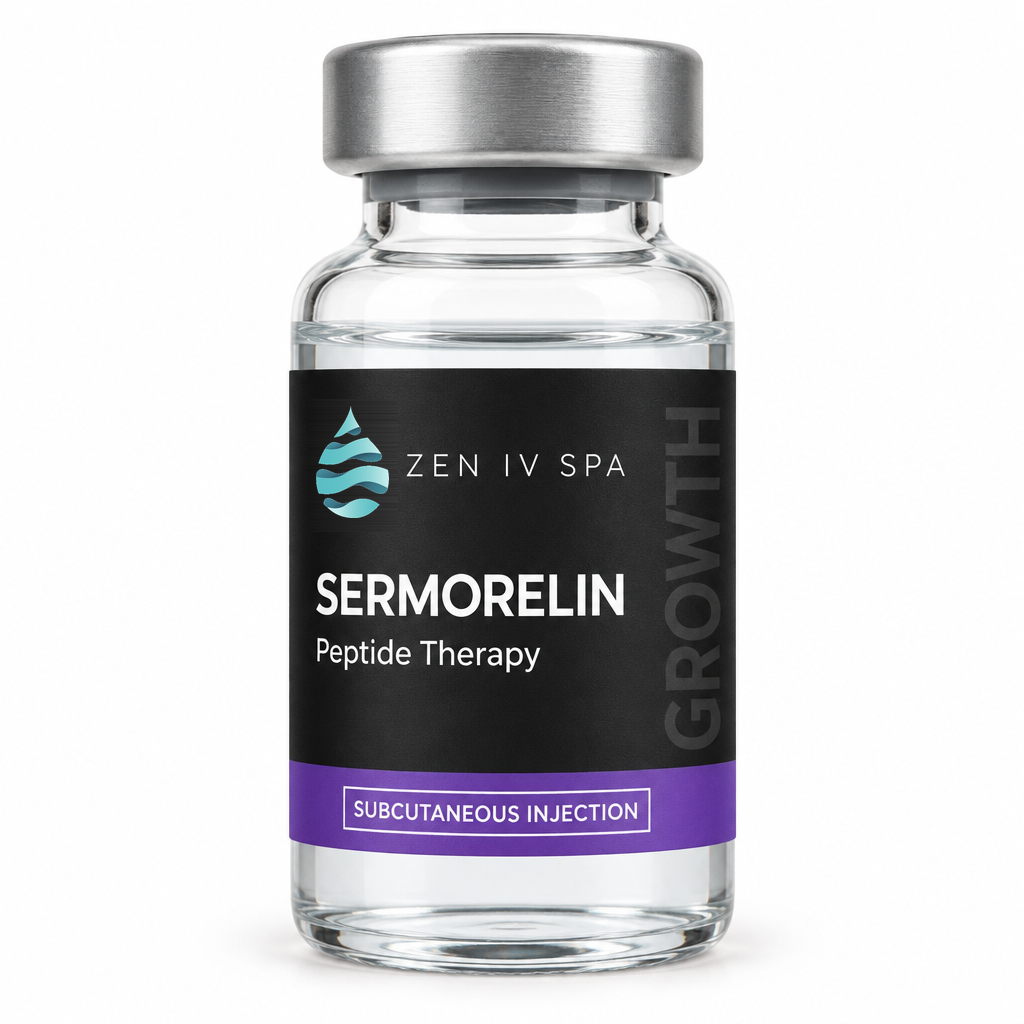
Sermorelin: A Slower Route to Growth Hormone Support
Rather than replacing growth hormone directly, sermorelin prompts your own pituitary to release it in its natural pulsatile pattern — a mechanism that preserves your body's feedback loop instead of overriding it. Taken nightly, reviewed quarterly against IGF-1 levels, it's a slower and by most accounts gentler approach than direct hormone replacement.
At $249 a month, all-inclusive, it's often paired with a body-composition or sleep-quality goal rather than weight loss specifically — worth naming clearly at intake so the right program gets built around the right goal.
What Separates a Program From an Online Order
Every one of these compounds is available from unregulated sources online with no labs, no provider, and no oversight of dosing or sourcing. That's also where most of the real risk in this category actually lives — not in the peptides themselves so much as in what happens when nobody is checking your history, your labs, or your response partway through a course.
A program means baseline labs before prescribing, a defined course length rather than open-ended use, sourcing through a licensed pharmacy, and a provider who's reachable if something feels off.
It also means a straight answer when a peptide isn't the right tool for what you're describing. If what you actually need is physical therapy for a nagging injury rather than eight weeks of BPC-157, or a maintenance plan rather than another round of a GLP-1, that's the answer you'll get — even though it's the less profitable one to give.
- —Baseline labs before anything is prescribed, every time.
- —A defined course length for repair peptides, not indefinite use.
- —Monthly check-ins and dose adjustments as you respond.
- —Medication sourced through a licensed pharmacy, not a gray-market importer.
Who a Peptide Program Isn't Right For
Active malignancy rules out most growth-hormone-adjacent peptides on theoretical grounds. Pregnancy and breastfeeding rule out essentially the whole category. And a personal or family history of medullary thyroid carcinoma or MEN2 rules out GLP-1 medications specifically — your provider screens for all of it at the first consult, before any prescription is written.
If a therapy isn't appropriate for you, we'll say so and point you toward what actually is, including a referral out when that's the honest answer.
What to Ask Before You Commit to Any Provider
Ask whether a provider reviews your labs and signs off before medication ships, not after the fact. Ask what the defined course length is, especially for a repair peptide like BPC-157 — an answer of "as long as you want" is a red flag, not a selling point.
Ask where the medication actually comes from. A licensed compounding pharmacy and an unregulated importer are very different supply chains, and it's a reasonable question to ask directly of anyone offering to prescribe you a peptide, in New Jersey or anywhere else.
Where New Jersey Fits Into the Service Area
Programs run identically across Hudson, Bergen and Essex counties as they do in New York — same pricing, same labs process, same provider access. Blood draws happen at your home or a lab near you, with results typically back within three business days, and the whole program from first consult onward is designed to run without a single trip into the city.
Hoboken, Jersey City, Weehawken, Edgewater and Fort Lee are the most frequent addresses on our peptide program list, followed closely by Englewood, Montclair and Newark — all treated as standard service area rather than a special case.
What Happens After a GLP-1 Program Ends
Weight regain after stopping a GLP-1 is well documented in the literature and isn't a personal failure — it's pharmacology, and any program that doesn't plan for it is skipping the part that actually matters long-term. Our maintenance and taper program runs $149 a month: a stepwise dose reduction, quarterly labs, and nutrition sessions built around protein and resistance-training targets, so the transition off medication is planned rather than abrupt.
For some patients, a low maintenance dose indefinitely turns out to be the more honest answer than a full taper — that's a conversation for your provider once you're actually at that point, not a decision made in advance.
Getting Started
Every peptide program — GLP-1, BPC-157, sermorelin, or NAD+ maintenance — starts the same way: a consult, a lab draw, and a provider decision based on what those labs show. Call or text (332) 239-2005, or book a consult online. Nothing ships until a provider has actually looked at your results.
That's true whether you're in Hoboken, Jersey City, Montclair or Newark — the process doesn't shorten or loosen depending on which town you're booking from.
Labs First, Prescription Second
Peptide programs across Hudson, Bergen and Essex counties start with a provider consult and baseline labs — not a checkout page.