Why it matters
That is what biomarker testing is for. This guide covers all of it: what a biomarker is, which ones are worth knowing, how to get a clean result, how to read the report, how often to repeat it, and the honest limits.
1. What a biomarker is
A biomarker is anything in your body that can be measured and that tells you something about your health. The FDA and the NIH define it as "a defined characteristic that is measured as an indicator of normal biological processes, pathogenic processes, or responses to an exposure or intervention."
In practice that means:
- Things in your blood: glucose, cholesterol, hormones, vitamins, proteins, blood cells.
- Things in urine, saliva or stool: protein in urine, cortisol in saliva.
- Physical measurements: blood pressure, heart rate, waist size, body weight.
- Genetic markers: a gene variant that raises your risk of a condition.
- Images: a bone density scan or a calcium score of the heart.
Blood pressure is a biomarker. So is your A1c. So is your waistline. This guide focuses on the ones measured from a blood draw, because one tube can carry dozens of them.
2. The science: why a number in blood means something
Your blood carries the products of nearly every organ. The liver releases enzymes. The kidneys clear waste. The thyroid sends out hormone. Fat and muscle release signals. When an organ is under strain, the amounts change, often long before you feel anything.
Three things make a biomarker useful:
- It tracks with a real outcome. LDL cholesterol matters because decades of studies tie it to heart attacks. A marker with no link to an outcome is just a number.
- It can be measured reliably. The same sample should give nearly the same result in two good labs.
- You can act on it. A result is worth having when it changes what you or your provider do next.
Researchers sort biomarkers by the job they do. A risk marker shows your chance of a future problem (LDL cholesterol). A diagnostic marker confirms a condition (A1c for diabetes). A monitoring marker tracks a condition or a treatment over time (TSH in someone on thyroid medication). A safety marker watches for harm from a medication (liver enzymes).
3. Why it matters
- Most early disease is silent. The CDC estimates that more than 8 in 10 adults with prediabetes do not know they have it. High blood pressure and high cholesterol rarely cause symptoms either.
- Early changes are the reversible ones. Prediabetes can often be turned around with food, movement and weight loss. Advanced diabetes cannot.
- Symptoms are vague; numbers are specific. "Tired all the time" can be low iron, low B12, low vitamin D, a slow thyroid, poor sleep or something else. A blood test narrows it down in days.
- A baseline makes later results mean more. Your own numbers from two years ago are a better comparison than the average of strangers.
- It shows whether a change is working. A new diet, a medication, a supplement: the repeat test is the proof.
4. The main categories, and what each one tells you
Heart and blood vessels
- Lipid panel: total cholesterol, LDL ("bad"), HDL ("good") and triglycerides. Standard adult targets: total under 200 mg/dL, LDL under 100, triglycerides under 150, HDL 40 or higher for men and 50 or higher for women.
- ApoB: counts the particles that carry cholesterol into artery walls. Many heart specialists consider it a sharper risk measure than LDL alone.
- Lipoprotein(a): a mostly inherited risk particle. Levels barely change through life, so it is usually tested once.
- hs-CRP: a marker of inflammation. Under 1 mg/L is low heart risk, 1 to 3 is average, above 3 is higher.
Blood sugar and metabolism
- Fasting glucose: under 100 mg/dL is normal, 100 to 125 is prediabetes, 126 or higher on two tests is diabetes.
- Hemoglobin A1c: your average blood sugar over about three months. Under 5.7% is normal, 5.7 to 6.4% is prediabetes, 6.5% or higher is diabetes.
- Fasting insulin: can show insulin resistance before glucose rises.
Blood count (CBC)
- Red cells and hemoglobin (low = anemia), white cells (infection and immune activity) and platelets (clotting).
Liver
- ALT and AST (enzymes that leak when liver cells are stressed), alkaline phosphatase, bilirubin and albumin.
Kidneys
- Creatinine, eGFR (how well the kidneys filter; 60 or higher is the usual healthy range) and BUN. Protein in the urine is an early warning sign.
Thyroid
- TSH is the first test. A typical range is about 0.4 to 4.0 mIU/L, though it varies by lab. Free T4, free T3 and thyroid antibodies are added when TSH is off or symptoms point that way.
Hormones
- Testosterone, estradiol, progesterone, FSH, LH, DHEA-S and cortisol. Timing matters: testosterone is drawn in the morning, and many female hormones depend on the day of the cycle.
Vitamins and minerals
- Vitamin D (25-hydroxyvitamin D): 20 ng/mL or above is enough for most people's bones, per the NIH.
- Vitamin B12 and folate.
- Ferritin and an iron panel. Ferritin is the body's iron store; low ferritin is the earliest sign of iron deficiency.
- Magnesium and the electrolytes (sodium, potassium, calcium).
Inflammation
- hs-CRP and ESR. They show that inflammation is present, not where or why.
The full list of what we test, panel by panel, is on our Biomarkers We Test page.
5. Types of tests
| Type | How it is collected | Good for | Keep in mind |
|---|---|---|---|
| Blood draw from a vein | A nurse or phlebotomist fills a few tubes | Almost everything; the standard | Needs a trained person; results in days |
| Finger-prick | A drop or a few drops on a card or in a small tube | A1c, some lipids, some hormones | Small samples are easier to spoil; fewer tests possible |
| Urine | A cup, or a 24-hour collection | Kidney function, infection, some hormones | Follow the collection steps exactly |
| Saliva | A tube | Cortisol through the day | Fewer validated tests |
| Stool | A kit at home | Colon cancer screening, gut infections | Screening tests have set age rules |
| Genetic | Blood or saliva, once | Inherited risk | A result does not change; a counselor should explain it |
You will also see tests sold as single markers, as panels (a set built around one question, such as a thyroid panel or an anemia panel) and as broad wellness panels. A panel chosen for your question is usually better than the biggest panel on the menu.
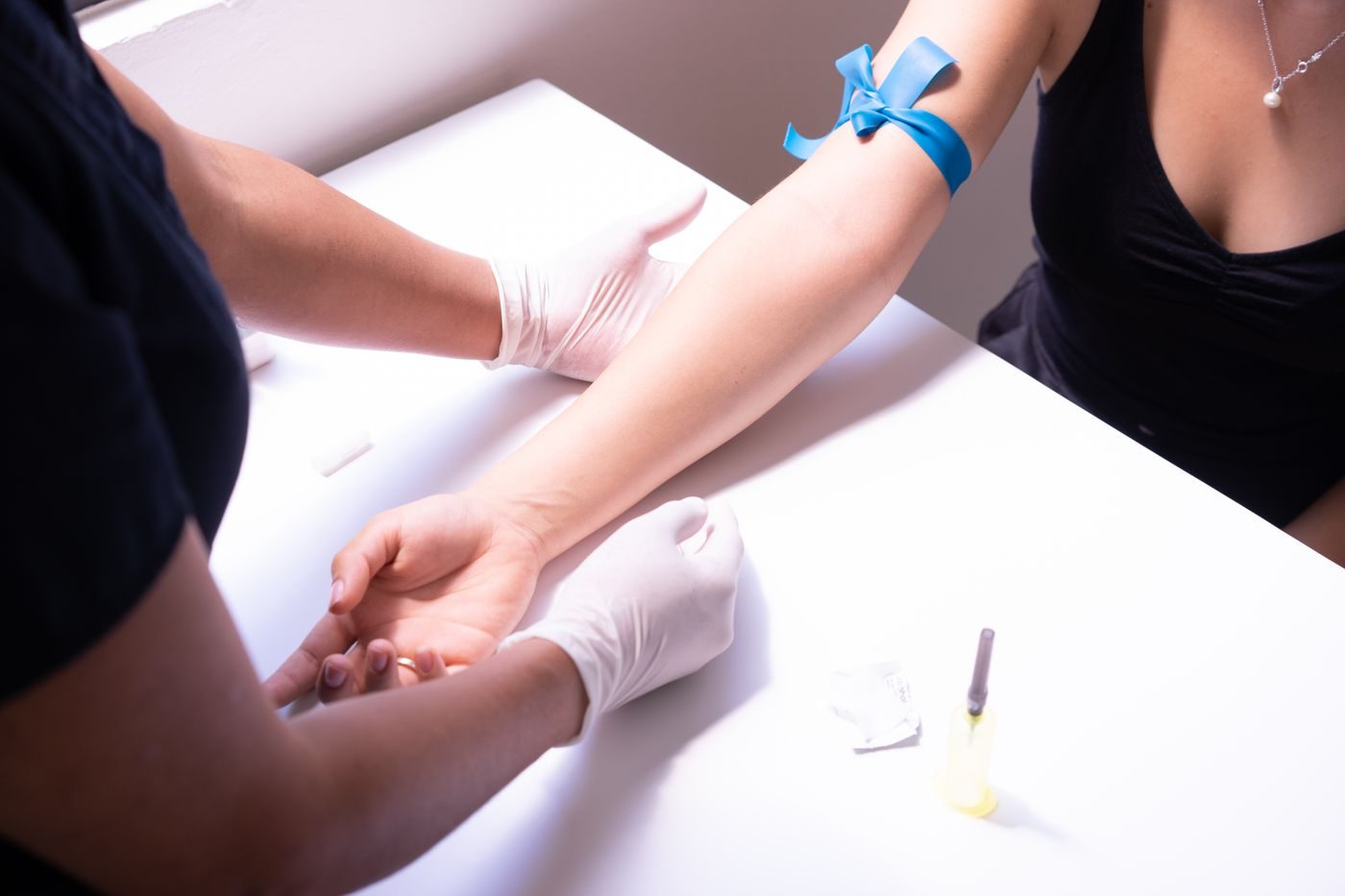
Two ways to get tested with us, both anywhere in New York & New Jersey: a licensed nurse comes to you for an In-Home Lab Draw, or an At-Home Lab Kit is delivered to your door.
6. How to read your results
Every result comes with a reference range. Here is what that range is, and what it is not.
- It is statistical. A lab builds it from a large group of healthy people and takes the middle 95%. So about 1 in 20 healthy people fall outside the range on any single test. Order 20 tests and one mildly flagged result is expected.
- It varies by lab. Different equipment gives slightly different numbers. Compare your results to the range printed on that report, and use the same lab over time when you can.
- "Normal" and "optimal" are different questions. For some markers, medical guidelines set targets based on outcomes, not on the average. LDL cholesterol is the clearest case: the target depends on your personal heart risk.
- Age, sex, pregnancy and medications shift the range. Kidney and hormone results are the usual examples.
- One result is a snapshot. Many markers move with sleep, a hard workout, a recent cold, hydration and time of day. A surprise is usually repeated before anyone acts on it.
- The trend carries the most information. A fasting glucose that has gone 88, 94, 99 across three years is a pattern worth acting on, even though each result is "normal".
- Results are read together. Low ferritin with low hemoglobin is iron-deficiency anemia. Low ferritin with normal hemoglobin is an earlier stage of the same problem. A single flag rarely tells the story.
Units matter too. Glucose and cholesterol are reported in mg/dL in the United States and in mmol/L in most other countries, so a number from abroad will look very different.
At Zen IV Spa a licensed provider reviews your results with you on video and tells you which ones matter, which ones to repeat and which ones to take to your own doctor.
7. How to prepare for a blood test
Small things change results. This is how to get a clean one.
- Fast if you are told to. Fasting glucose and insulin need 8 to 12 hours with water only. A lipid panel can often be done without fasting, but triglycerides read higher after a meal, so many providers still ask for a fast.
- Drink water. It makes the veins easier to find and does not affect the results.
- Skip alcohol for 24 hours. It raises triglycerides and liver enzymes.
- Skip a hard workout the day before. Heavy exercise can raise muscle and liver enzymes and markers of inflammation.
- Ask about biotin. The FDA has warned that biotin, common in hair and nail supplements, can cause falsely high or low results on some tests, including thyroid and heart tests. Tell the provider if you take it; you may be asked to stop for a few days first.
- Take your regular medications unless told otherwise, and list everything you take, supplements included.
- Book the morning for testosterone and cortisol, which follow a daily rhythm and peak early.
- Tell us about your cycle or pregnancy for female hormone tests.
- Reschedule if you are sick. An infection changes the white count, ferritin and CRP for weeks.
- Test under the same conditions each time. Same time of day, same fasting state. That is what makes two results comparable.
When you book, we call to confirm and tell you exactly how to prepare for the tests you chose.
8. How often to test
There is no single schedule. It depends on your age, your risks and what the last results showed. These are the main guideline anchors for adults:
- Blood pressure: screening for all adults from age 18. Yearly from age 40 or with risk factors; every three to five years for adults 18 to 39 with normal readings and no risk factors (US Preventive Services Task Force).
- Blood sugar: the American Diabetes Association advises testing all adults from age 35, and earlier with risk factors such as extra weight or family history. If normal, repeat at least every three years. With prediabetes, yearly.
- Cholesterol: the American Heart Association advises a check every four to six years for adults at low risk, starting at age 20, and more often with risk factors or on treatment.
- Lipoprotein(a): once in adulthood is usually enough.
- Thyroid, vitamin D, B12, iron, hormones: tested when symptoms or risks point to them, not on a fixed calendar for everyone.
Reasonable rules of thumb beyond the guidelines:
- Healthy, no symptoms, no risk factors: a basic set (CBC, metabolic panel, lipids, A1c) every one to three years.
- Risk factors, a family history, or over 40: yearly.
- After starting a medication, hormone care, a weight-loss program or a major diet change: a repeat at about three months, because that is how long A1c and many other markers take to settle. Then as your provider sets.
- Chasing a symptom: test now, and repeat after treatment to confirm it worked.
9. How testing has changed
- 1940s to 1960s: the Framingham Heart Study, started in 1948, followed thousands of people for decades and showed that cholesterol and blood pressure predict heart disease. The term "risk factor" comes from it.
- 1970s and 1980s: home glucose meters put a lab test in patients' hands for the first time.
- 1990s and 2000s: automated analyzers made large panels fast and cheap. The high-sensitivity CRP test linked inflammation to heart risk.
- 2010: the American Diabetes Association accepted A1c for diagnosing diabetes, so a fasting sample was no longer always required.
- Since then: continuous glucose monitors, at-home collection kits, direct access to your own results, and newer markers such as ApoB and Lp(a) moving into everyday care.
The practical change for you: testing no longer has to mean a waiting room. A licensed nurse can draw your blood at home, at your office or at your hotel.
10. From data to action
A result is only useful if something follows it. A good sequence looks like this:
- Start with a question. "Why am I tired?" "Is my heart risk rising?" "Is this program working?" The question picks the tests.
- Get a clean baseline. Prepared properly, drawn properly.
- Review it with a licensed provider. They sort the results into three piles: fine, watch, act.
- Act on a few things, not twenty. For most people the big levers are the same: sleep, movement, food, weight, alcohol, and, where a provider prescribes it, medication.
- Retest on purpose. Repeat the markers you were trying to move, at the right interval, under the same conditions.
- Share the results with your own doctor. Your primary care doctor should have them in your record.
Examples. Low ferritin leads to finding the cause and replacing iron under a provider's direction, then a recheck in a few months. An A1c in the prediabetes range leads to changes in food and activity and a repeat A1c in three to six months. A low vitamin D leads to a provider-set supplement plan and a recheck after about three months.
11. The limits of biomarker testing
Testing has real limits, and knowing them makes the results more useful.
- A test is not a diagnosis. A result is one piece. A diagnosis comes from a provider who also knows your history, your symptoms and your exam.
- More tests mean more false alarms. Because each reference range leaves out 5% of healthy people, big panels produce flagged results that mean nothing. Those can lead to worry, repeat tests and procedures you did not need.
- Some findings should be left alone. Screening healthy people for everything can uncover harmless quirks. This is why medical groups recommend against some tests in people without symptoms.
- Not every marker has a proven action. If nothing would change based on the result, the test may not be worth doing.
- Newer and "wellness" markers have thinner evidence. A range labelled "optimal" is sometimes one company's opinion, not a guideline.
- Normal results do not rule everything out. If you have symptoms, see a doctor regardless of what a panel shows.
- Blood tests do not replace screening such as colonoscopy, mammograms, Pap tests or a skin check.
- Urgent symptoms are not a testing question. Chest pain, trouble breathing, fainting or sudden weakness need 911 or an emergency room.
How it works at Zen IV Spa
You choose a panel on our Labs & Testing page or ask us which one fits your question. We call to confirm and tell you how to prepare. A licensed nurse comes to your home, office or hotel, anywhere in New York & New Jersey, and draws your blood. The sample goes to the lab. A licensed provider reviews the results with you on video. Everything is overseen by our medical director.
Quick answers
What is a biomarker, in one line?+
Anything measurable in your body, most often in blood, that tells you something about your health.
Do I need to fast?+
For fasting glucose and insulin, yes: 8 to 12 hours, water only. For a lipid panel, often not, but follow what you are told when you book.
How long do results take?+
Most come back within a few days. Some specialty tests take longer.
One of my results is flagged. Should I worry?+
Not on that alone. About 1 in 20 results fall outside the range in healthy people. The provider looks at how far out it is, your other results and whether it repeats.
How often should I get blood work?+
Every one to three years if you are healthy with no risk factors; yearly with risk factors or over 40; about three months after starting a treatment or program.
Is a bigger panel better?+
No. A panel matched to your question gives clearer answers and fewer false alarms.
Can a blood test diagnose me?+
No. A licensed provider makes a diagnosis using your results together with your history and symptoms.
What does it cost?+
Each panel's price is listed on the Labs & Testing page. Travel is included.
Ready to see your numbers? Choose a panel on our Labs & Testing page or call or text (332) 239-2005.
Sources: FDA-NIH Biomarker Working Group, BEST (Biomarkers, EndpointS, and other Tools) Resource; CDC, National Diabetes Statistics Report and Prediabetes; American Diabetes Association, Standards of Care in Diabetes (diagnosis and screening; A1c for diagnosis, Diabetes Care 2010); US Preventive Services Task Force, Screening for Prediabetes and Type 2 Diabetes (2021) and Screening for Hypertension in Adults (2021); American Heart Association / American College of Cardiology, Guideline on the Management of Blood Cholesterol (2018); NIH National Heart, Lung, and Blood Institute, Blood Cholesterol and the Framingham Heart Study; Pearson et al., Circulation 2003 (AHA/CDC statement on hs-CRP); National Lipid Association, Lipoprotein(a) statement (2024); National Kidney Foundation, eGFR; Endocrine Society, Testosterone Therapy in Men with Hypogonadism guideline (2018); NIH Office of Dietary Supplements, Vitamin D Fact Sheet; FDA Safety Communication, Biotin May Interfere with Lab Tests; MedlinePlus, How to Understand Your Lab Results and Fasting for a Blood Test. Educational content, not medical advice.
Ready to book?
Call or text (332) 239-2005, or book online. A licensed nurse comes to you anywhere in all of New York & New Jersey, 8 AM to 11 PM, seven days a week.
All treatments are medical services. Every guest is screened, and every treatment is provided only under the clearance, prescription or standing protocol of a licensed medical provider. Compounded peptides are not FDA-approved unless stated. Nothing on this page is a diagnosis or a promise of results.