First, the honest answer: 'GLP-3' is not a real hormone
If you search for GLP-3, you will find videos and posts talking about a next-generation weight-loss shot. But your body does not make a hormone called GLP-3, and no drug company uses that name.
GLP stands for glucagon-like peptide. There are two real ones. GLP-1 is the gut hormone that semaglutide (Wegovy, Ozempic) copies. GLP-2 is a different gut hormone that helps the intestine grow and absorb food. A GLP-2 drug called teduglutide treats short bowel syndrome, not weight.
So where did 'GLP-3' come from? It is a nickname. People started saying GLP-1 for one-hormone drugs, 'GLP-2' for two-hormone drugs like tirzepatide, and 'GLP-3' for three-hormone drugs like retatrutide. The counting is catchy, but it is not what the names mean.
What people usually mean: triple agonists
A triple agonist is a drug that turns on three hormone receptors at the same time. A receptor is like a lock on a cell. The drug is the key. The three locks are GLP-1, GIP, and glucagon.
GLP-1 makes you feel full and slows your stomach. GIP is another gut hormone that seems to work with GLP-1 to reduce appetite and may help with nausea. Glucagon is the odd one out. It raises blood sugar on its own, but it also burns energy and fat in the liver.
The idea is simple. Hit more targets, lose more weight. Retatrutide, made by the drug company Eli Lilly, is the most advanced triple agonist. It is the drug most people mean when they say GLP-3.
How the generations compare
Semaglutide is a single agonist. It hits GLP-1 only. In the STEP 1 trial, adults lost about 15% of body weight over 68 weeks.
Tirzepatide (Zepbound, Mounjaro) is a dual agonist. It hits GLP-1 and GIP. In the SURMOUNT-1 trial, adults on the highest dose lost about 21% over 72 weeks.
Retatrutide hits GLP-1, GIP, and glucagon. In a phase 2 trial published in the New England Journal of Medicine in 2023, adults on the 12 mg dose lost about 24% over 48 weeks, and weight was still dropping when the trial ended. Phase 2 trials are smaller and shorter than the final phase 3 trials, so these numbers may change.
Where retatrutide stands right now
Retatrutide is not FDA-approved. Eli Lilly is running large phase 3 trials called TRIUMPH. Early results from that program have been reported, but the full data and any FDA decision are still ahead.
Because it is not approved, any retatrutide you can get today is either part of a clinical trial or made by a compounding pharmacy. Compounded retatrutide is not FDA-approved, and its strength and purity are not checked by the FDA.
Side effects in the trials looked like other GLP-1 drugs: nausea, vomiting, diarrhea, and constipation, mostly during dose increases. The glucagon part can also raise heart rate a little. We will know more about long-term safety when the phase 3 results are complete.
Do you need a 'GLP-3' to lose weight?
Probably not. Many people do very well on semaglutide or tirzepatide, and both have years of safety data behind them. More hormones can mean more weight loss, but it can also mean more side effects.
The right drug depends on your health, your goals, your budget, and how your body handles each medicine. Someone who lost 10% on semaglutide and stalled might consider tirzepatide. Someone who is doing fine does not need to chase the newest shot.
A good prescriber will start with the medicine that fits you, not the one with the most buzz.
How Zen IV Spa can help
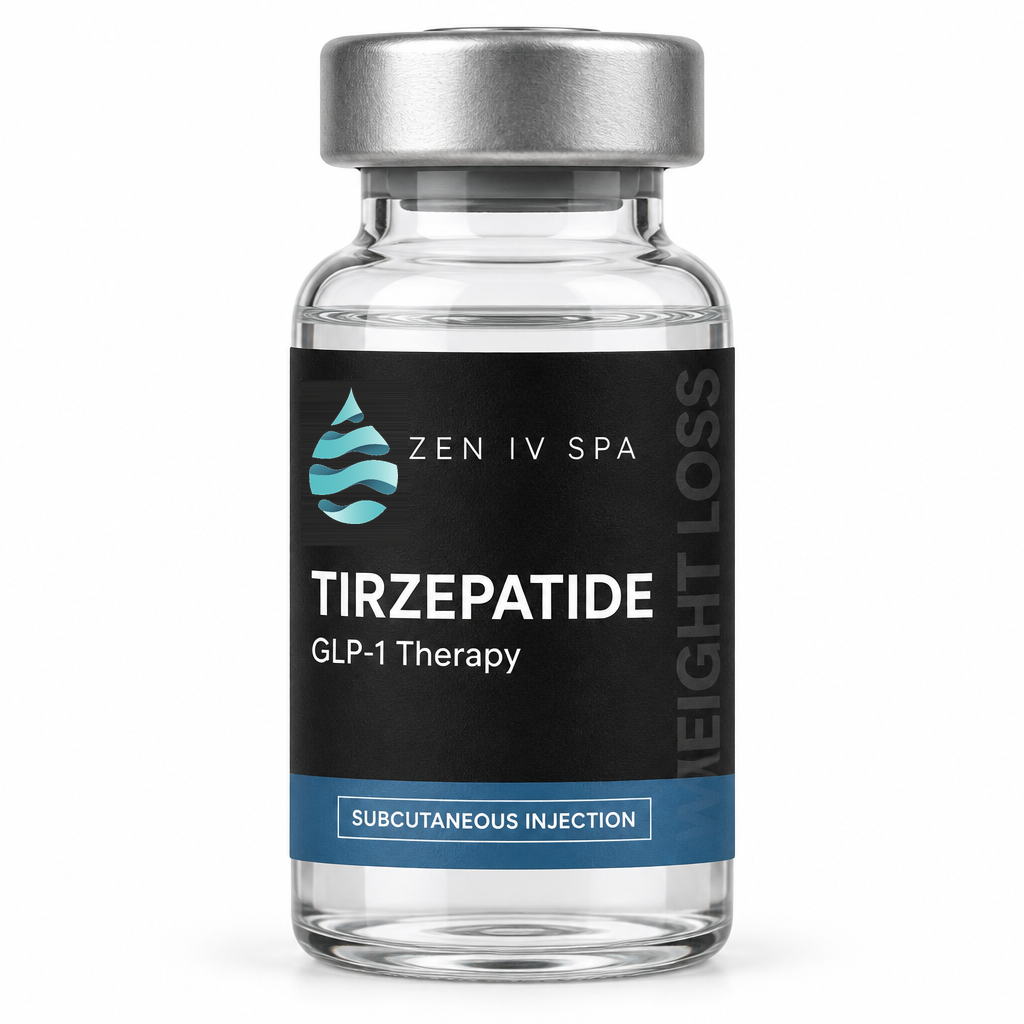
Zen IV Spa offers compounded semaglutide ($199/month), compounded tirzepatide ($299/month), and retatrutide ($249/month). None of these compounded products are FDA-approved. Each program starts with a free video visit with our medical director, and a nurse draws your labs at home in New York and New Jersey. Learn more on our peptides page at /peptides/ or our weight-loss page at /weight-loss/, or call (332) 239-2005.
Common Questions
Is GLP-3 a real hormone?+
No. Your body makes GLP-1 and GLP-2, but not GLP-3. The term is a nickname for drugs that act on three hormone receptors.
What drug do people mean by GLP-3?+
Usually retatrutide, a triple agonist from Eli Lilly that acts on GLP-1, GIP, and glucagon receptors.
Is retatrutide FDA-approved?+
No. It is still in phase 3 trials. Compounded retatrutide is also not FDA-approved.
How much weight did people lose on retatrutide?+
In a phase 2 trial, about 24% of body weight over 48 weeks at the 12 mg dose. Larger phase 3 trials are still being completed.
Is a triple agonist safer than a GLP-1 drug?+
We do not know yet. The side effects look similar so far, but long-term safety data is not complete.
Does Zen IV Spa offer retatrutide?+
Yes, at $249 per month after a free video visit, with at-home labs in New York and New Jersey. It is compounded and not FDA-approved.
Sources: Retatrutide phase 2 trial, NEJM 2023; SURMOUNT-1 trial, NEJM 2022; STEP 1 trial, NEJM 2021; FDA prescribing information for Gattex (teduglutide).
All treatments are medical services. Every guest is screened, and every treatment is prescribed by a licensed provider. Nothing on this page is medical advice for you personally, and the opinions summarized here belong to the doctors named, not to Zen IV Spa. Talk to a provider before starting or stopping anything.