There is no stop age
People do not stop having sex at a set age. They stop when health, a partner's absence, or desire gets in the way, and for many that never fully happens. Large surveys of older adults in the United States and Europe show that a surprising share of people remain sexually active well into their 70s and beyond.
One of the best-known studies, published in the New England Journal of Medicine in 2007, surveyed about 3,000 American adults aged 57 to 85. Roughly three-quarters of those aged 57 to 64 were sexually active. About half of those 65 to 74 were. And about a quarter of those 75 to 85 still were, most of them a few times a month.
So the honest answer is: sex declines gradually with age, but it does not switch off.
What drives the decline
The biggest single factor is having a partner. Older women in particular are more likely to be widowed, and the surveys show that among people with a partner, activity stays much higher at every age.
Health is next. Heart disease, diabetes, arthritis, depression, and the medicines used to treat them can all reduce desire or make sex physically difficult. Erectile dysfunction, or ED, affects roughly half of men over 50 to some degree and becomes more common each decade.
Hormones play a role too. Men's testosterone falls slowly from their 30s onward. Women experience a sharp drop in estrogen at menopause, which can cause vaginal dryness and discomfort. Both are treatable.
What actually changes with age
For men, erections may take longer to achieve, may be less firm, and may need more direct stimulation. The refractory period, the rest time between orgasms, gets longer. Orgasm may feel less intense.
For women, arousal takes longer, natural lubrication decreases, and thinning vaginal tissue can make intercourse uncomfortable without a lubricant or local estrogen treatment.
None of this means the end of a sex life. It means sex often gets slower, more deliberate, and more focused on the whole experience rather than just intercourse. Many older couples report that it also gets better in ways that matter: less pressure, more communication, more intimacy.
The problems that are fixable
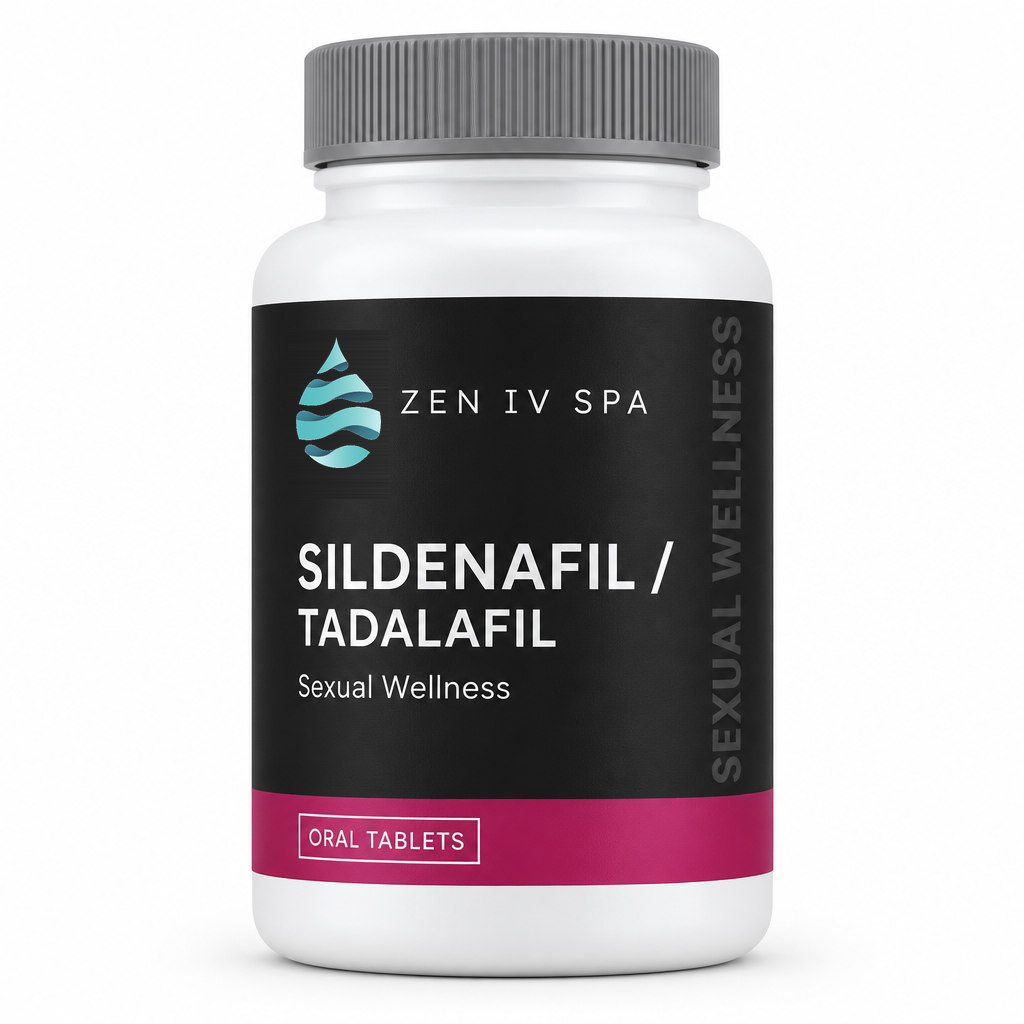
Erectile dysfunction is the most common issue men bring to clinicians, and it is highly treatable. Sildenafil, the active ingredient in Viagra, and tadalafil, the active ingredient in Cialis, are FDA-approved pills that improve blood flow to the penis. In clinical trials they help the majority of men who try them. Zen IV Spa prescribes the generic versions through its ED program for $129.
Low testosterone, confirmed by a blood test, can be treated with testosterone replacement therapy. It is not right for everyone and needs ongoing monitoring, but for men with truly low levels it can restore desire and energy. Zen IV Spa can draw labs at your home with a nurse.
Vaginal dryness responds to over-the-counter moisturizers and lubricants, and to prescription low-dose vaginal estrogen. Painful sex should always be discussed with a clinician; it is not something to simply endure.
Habits that keep sex going
The same things that protect your heart protect your sex life: regular exercise, not smoking, limiting alcohol, keeping blood sugar and blood pressure under control, and sleeping enough. ED is often the first warning sign of heart disease, so treating the cause matters.
Stay in practice. Research on older adults suggests that people who remain sexually active tend to keep their function longer. Use it or lose it has some truth to it.
Talk to your partner about what has changed and what feels good now. Many couples stop out of embarrassment or assumption rather than lack of interest.
When to see a clinician
If erections are consistently a problem, if desire has dropped sharply, if sex has become painful, or if a medicine seems to be the cause, bring it up. Clinicians hear these questions every day, and most have straightforward answers.
A free video visit with Zen IV Spa is a low-pressure way to start. Treatment, where appropriate, ships to your home in New York and New Jersey.
Where to go from here
Age changes sex; it does not end it. If something is standing between you and the sex life you want, the Zen IV Spa sexual wellness page at /sexual-wellness/ explains the ED program, premature ejaculation treatment, and hormone testing. Book a free video visit at https://zenivspa.zenoti.com/webstoreNew/services or call (332) 239-2005.
Common Questions
Is it normal to still want sex in your 70s?+
Yes. In a large U.S. survey, about half of adults aged 65 to 74 and a quarter of those 75 to 85 reported being sexually active.
Why do more women than men stop having sex as they age?+
Mostly because women are more likely to outlive their partners. Among older adults who have a partner, the gap narrows a lot.
Is erectile dysfunction just part of getting old?+
It is more common with age, but it is not something you have to accept. Sildenafil and tadalafil help most men, and ED can be a sign of heart problems worth checking.
Does testosterone therapy restore sex drive in older men?+
It can, if blood tests show testosterone is truly low. It is not a fix for normal aging and needs monitoring.
Is sex safe for people with heart disease?+
Usually yes. The effort is similar to climbing two flights of stairs. Ask your doctor, especially if you have had a recent heart event or take nitrates, which cannot be combined with ED pills.
Sources: Lindau et al., A Study of Sexuality and Health among Older Adults in the United States, New England Journal of Medicine 2007; National Institute on Aging guidance on sexuality in later life; FDA prescribing information for Viagra (sildenafil) and Cialis (tadalafil).
All treatments are medical services. Every guest is screened, and every treatment is prescribed by a licensed provider. Nothing on this page is medical advice for you personally, and the opinions summarized here belong to the doctors named, not to Zen IV Spa. Talk to a provider before starting or stopping anything.