What tirzepatide is
Tirzepatide is a once-a-week injectable medicine made by Eli Lilly, an American drug company. It is sold as Mounjaro for type 2 diabetes (FDA-approved 2022) and as Zepbound for weight loss (FDA-approved 2023) and obstructive sleep apnea in adults with obesity (2024).
It is a peptide, which means it is a short chain of amino acids, the building blocks of protein. Scientists built it to look like a natural gut hormone but stay in the body for about five days instead of a few minutes.
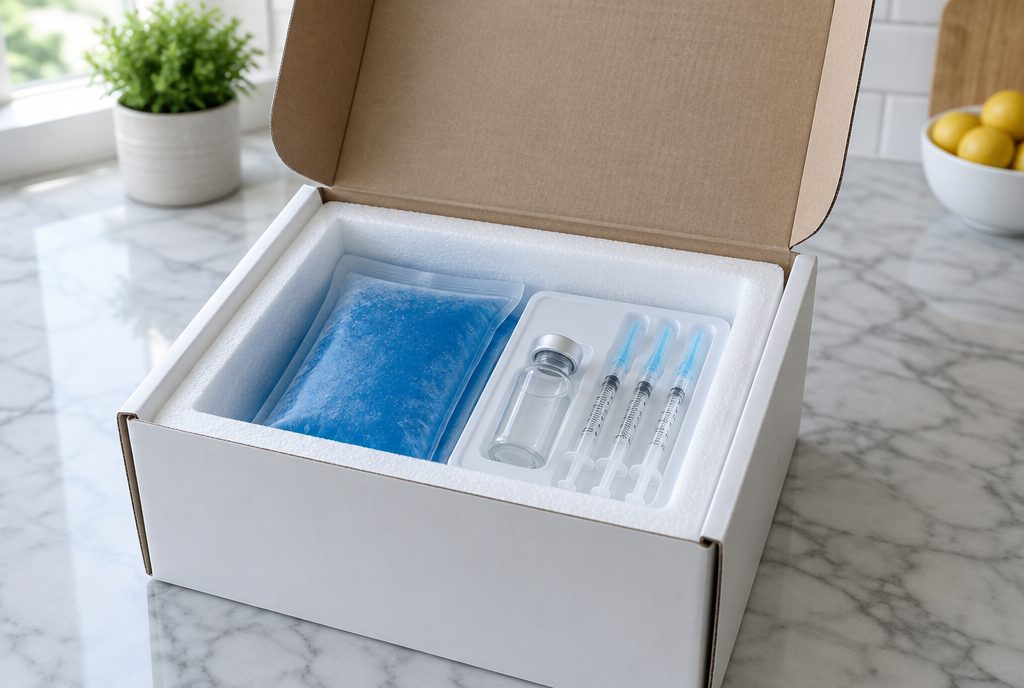
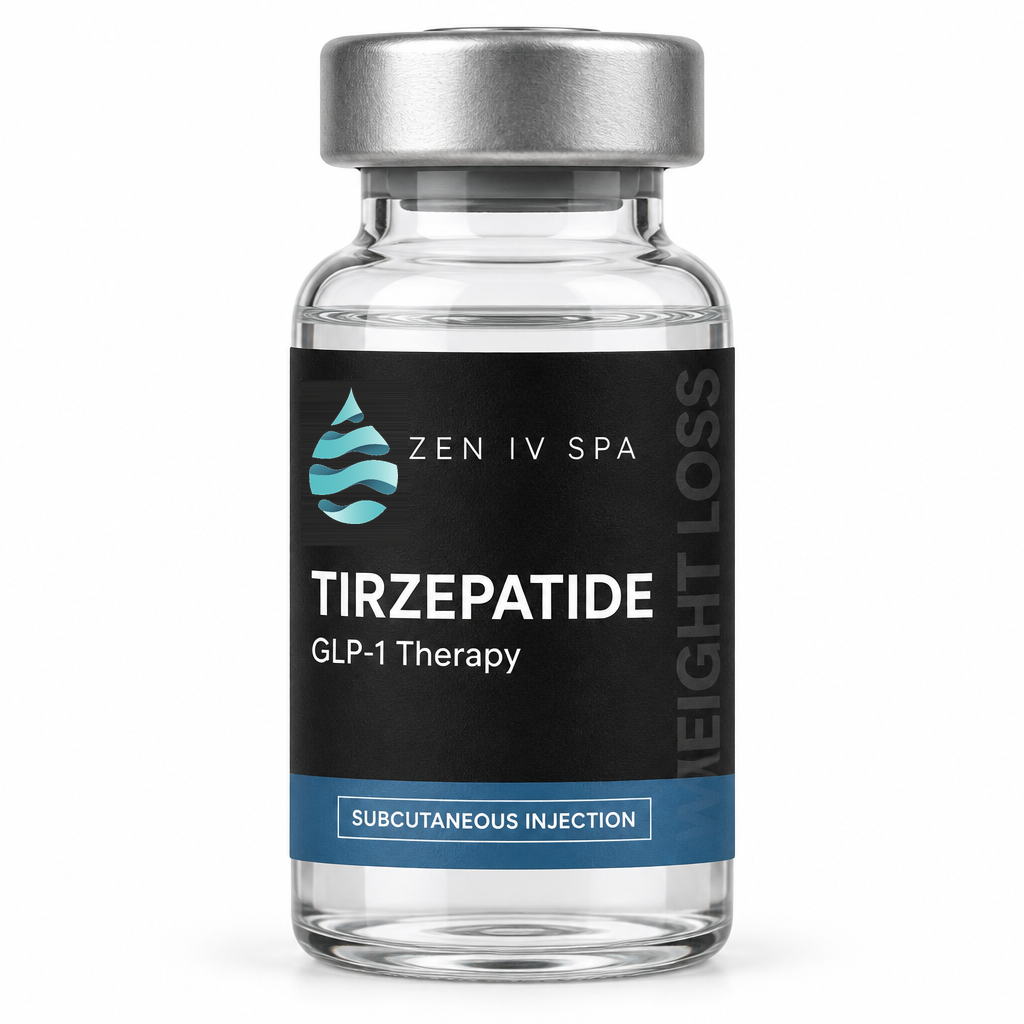
Zen IV Spa prescribes compounded tirzepatide, which has the same active ingredient but is made by a licensed compounding pharmacy. Compounded tirzepatide is not FDA-approved.
The two hormones it copies
After you eat, your gut releases hormones called incretins that tell the rest of the body food is coming. The two main ones are GLP-1 (glucagon-like peptide-1) and GIP (glucose-dependent insulinotropic polypeptide).
Older medicines like semaglutide copy only GLP-1. Tirzepatide copies both GLP-1 and GIP. That is why it is called a dual agonist. An agonist is a molecule that switches a receptor on, like a key turning a lock.
Why add GIP? On its own GIP is a weak weight-loss hormone, but when it is combined with GLP-1, animal and human studies suggest it boosts the effect on appetite and may reduce nausea. Scientists are still working out the full explanation.
What happens in your body
In the brain, tirzepatide acts on appetite centers in the hypothalamus and brainstem. You feel full sooner, think about food less, and cravings for high-fat and sweet foods usually fade. Many patients describe the constant background chatter about food going quiet.
In the stomach, it slows how fast food empties into the intestine. That keeps you full longer after a meal. This effect is strongest in the first weeks and partly wears off over time.
In the pancreas, it increases insulin release when blood sugar is high and lowers glucagon, a hormone that raises blood sugar. Because the insulin boost only happens when sugar is high, the drug on its own rarely causes low blood sugar.
What the trials show
In SURMOUNT-1, a randomized controlled trial of more than 2,500 adults with obesity but not diabetes, people on the 15 mg dose lost an average of about 20.9 percent of body weight over 72 weeks, compared with about 3 percent on placebo. More than half of those on the highest dose lost at least 20 percent.
In the SURPASS trials for type 2 diabetes, tirzepatide lowered A1C, a three-month blood sugar average, by around 2 percentage points and beat semaglutide 1 mg in a head-to-head study called SURPASS-2.
A direct comparison for weight, SURMOUNT-5, found tirzepatide produced about 20 percent weight loss versus about 14 percent for semaglutide 2.4 mg over 72 weeks. Results in trials do not guarantee your results, but the gap was consistent.
How the dose works
Tirzepatide starts at 2.5 mg once a week for four weeks. The dose then rises by 2.5 mg every four weeks or longer, as tolerated, up to a maintenance dose of 5, 10, or 15 mg. Going slowly is what keeps nausea manageable.
It is injected under the skin of the belly, thigh, or upper arm with a tiny needle. Most people say it hurts less than a fingerstick. At Zen IV Spa, we show you how to do it over video and are a message away if you have questions.
Because the drug lasts about five days, a missed dose can be taken within four days. After that, skip it and take the next one on schedule.
Side effects and who should not take it
The most common side effects are nausea, diarrhea, decreased appetite, vomiting, constipation, and belly discomfort. They are most noticeable with each dose increase and tend to settle. In SURMOUNT-1 most stomach effects were mild to moderate.
The label carries a boxed warning about thyroid C-cell tumors seen in rodent studies. People with a personal or family history of medullary thyroid cancer or MEN 2 should not take it. Pancreatitis, gallbladder problems, kidney injury from dehydration, and low blood sugar when combined with insulin or sulfonylureas are also listed.
Tirzepatide is not for people who are pregnant or breastfeeding. It can also make birth control pills less effective for a few weeks after starting and after each dose increase, so a backup method is advised during those windows.
Find out if tirzepatide fits you
If you live in New York or New Jersey and want to know whether tirzepatide is right for your body and your goals, start with a free video visit with our medical director. A nurse can draw labs at your home, and compounded tirzepatide is $299 per month, shipped to your door. Visit /weight-loss/ or call (332) 239-2005.
Common Questions
Is tirzepatide the same as semaglutide?+
No. Semaglutide copies one gut hormone, GLP-1. Tirzepatide copies two, GLP-1 and GIP. In head-to-head trials tirzepatide produced more weight loss.
How fast does tirzepatide start working?+
Appetite usually drops within the first week or two. Noticeable weight loss typically shows up over the first one to three months as the dose goes up.
Does tirzepatide cause low blood sugar?+
Rarely on its own, because it only boosts insulin when sugar is high. The risk rises if it is combined with insulin or sulfonylurea pills.
Can I drink alcohol on tirzepatide?+
Small amounts are generally okay, but alcohol adds calories and can worsen nausea. Talk to your prescriber if you have diabetes or liver concerns.
Is compounded tirzepatide FDA-approved?+
No. Compounded tirzepatide contains the same active ingredient as Zepbound and Mounjaro but is made by a compounding pharmacy and is not FDA-approved.
What happens if I stop tirzepatide?+
In the SURMOUNT-4 trial, people who switched to placebo regained much of their lost weight within a year. Long-term habits and a maintenance plan matter.
Sources: FDA prescribing information for Zepbound (2024) and Mounjaro (2025); SURMOUNT-1 trial, NEJM 2022; SURPASS-2 trial, NEJM 2021; SURMOUNT-4 trial, JAMA 2024; SURMOUNT-5 trial, NEJM 2025.
All treatments are medical services. Every guest is screened, and every treatment is prescribed by a licensed provider. Nothing on this page is medical advice for you personally, and the opinions summarized here belong to the doctors named, not to Zen IV Spa. Talk to a provider before starting or stopping anything.