What collagen is
Collagen is the most common protein in your body. It is the scaffolding inside your skin, tendons, ligaments, cartilage, and bones. It is what keeps skin firm and joints springy.
Your body makes its own collagen from the protein you eat. But production slows down starting in your mid-20s. By your 40s and 50s, skin gets thinner, lines deepen, and joints may feel stiffer. Smoking, sun, and a diet high in sugar speed this up.
Collagen supplements are usually made from cow hide, fish skin, or chicken cartilage. The collagen is broken into small pieces called peptides, then sold as powders, pills, or drinks.
Why men are asking about it
For years collagen was marketed to women. That has changed. Men now buy it for joint aches after the gym, for skin that looks tired, and for hair that is thinning. Men's skin is thicker and has more collagen than women's to start with, but it loses collagen at a steady rate every year.
Many men also hear that collagen helps hair growth. That claim is weaker than the others, as we will explain.
What studies actually show for skin
This is the strongest area of evidence, but it is still modest. Several small randomized controlled trials (the kind where one group gets the real thing and one gets a placebo) have found that 2.5 to 10 grams of collagen peptides a day for 8 to 12 weeks improved skin hydration and elasticity by a measurable but small amount.
A 2021 review that pooled 19 such trials found similar results. Keep in mind that many of these studies were paid for by supplement companies, and most were done in women.
So the honest answer is: collagen may give skin a slight boost in moisture and bounce. It is not going to erase wrinkles.
What studies show for joints and hair
For joints, a handful of trials in athletes and people with knee osteoarthritis found that daily collagen reduced pain scores a bit compared with placebo. The effect was small, and the trials were short. It is reasonable to try, but it is not a replacement for exercise, strength training, or medical care.
For hair, there are almost no good human studies. Collagen provides amino acids that hair uses, but so does any protein-rich diet. If your hair is thinning in the classic male pattern (temples and crown), the cause is hormones and genetics, not a collagen shortage. Collagen will not fix that.
Better-studied options for skin and hair
If your goal is younger-looking skin, tretinoin has decades of research behind it. It is a prescription vitamin A cream that boosts collagen production in the skin itself, smooths fine lines, and fades dark spots. Zen IV Spa offers tretinoin for $99 through a video visit with a licensed clinician.
For male pattern hair loss, the proven treatments are finasteride and minoxidil. Zen IV Spa offers finasteride for $49 a month, oral minoxidil for $59, a topical spray for $69, or the full hair program for $149.
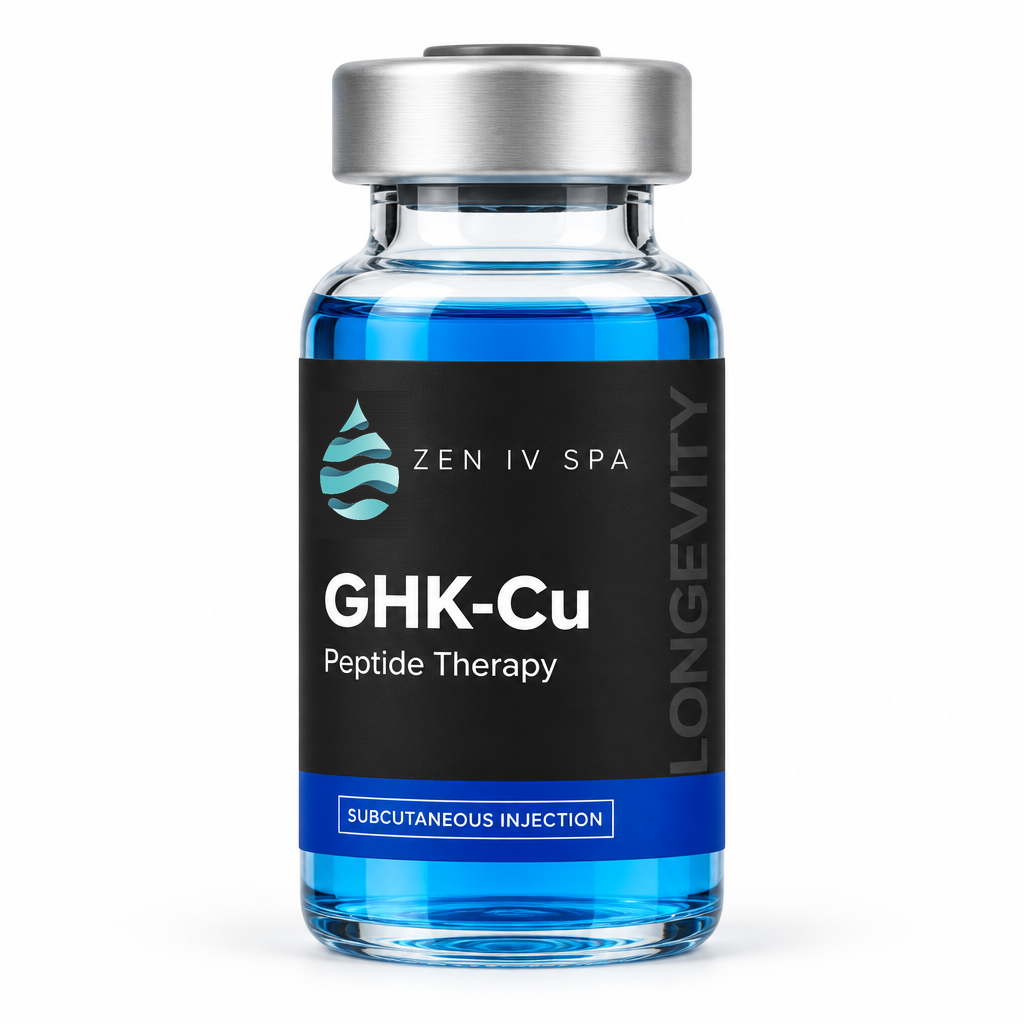
Some people also ask about GHK-Cu, a copper peptide that has shown promise in lab and small human studies for skin repair. Compounded peptides like GHK-Cu are not FDA-approved, and a clinician should decide whether one is right for you.
How to take collagen if you want to try it
Pick hydrolyzed collagen peptides, 5 to 10 grams a day. Mix it into coffee or a shake. Taking it with vitamin C may help, since vitamin C is needed to build collagen.
Give it 8 to 12 weeks. If you notice nothing, you have your answer. Collagen is generally safe, but check the label for allergens like fish or shellfish.
Protect what you have. Daily sunscreen, not smoking, sleep, and strength training do more for your collagen than any powder.
Where to go from here
If you want results you can actually see, prescription skin care is the better bet. Visit the Zen IV Spa skin page at /skin/ to learn about tretinoin and our other skin programs. A nurse or clinician in New York and New Jersey can review your goals in a free video visit. Book at https://zenivspa.zenoti.com/webstoreNew/services or call (332) 239-2005.
Common Questions
Does collagen work differently for men than women?+
No. The protein is the same. Most studies were done in women, so there is less direct evidence in men, but there is no reason the small skin benefits would differ.
Will collagen regrow my hair?+
There is no solid evidence it will. Male pattern hair loss is driven by hormones. Finasteride and minoxidil are the treatments that have been proven in clinical trials.
How much collagen should I take?+
Most trials used 2.5 to 10 grams of hydrolyzed collagen peptides a day for at least 8 weeks.
Is collagen safe?+
For most people, yes. Mild stomach upset is the most common complaint. Avoid it if you are allergic to the source animal, such as fish.
What works better than collagen for skin aging?+
Tretinoin and daily sunscreen have far stronger evidence. Tretinoin actually increases collagen production in the skin.
Is GHK-Cu the same as collagen?+
No. GHK-Cu is a copper peptide that may signal the skin to repair itself. It is a compounded product and is not FDA-approved.
Sources: de Miranda et al., systematic review and meta-analysis of oral collagen supplementation, International Journal of Dermatology 2021; Clark et al., collagen hydrolysate in athletes with joint pain, Current Medical Research and Opinion 2008; Cleveland Clinic and Harvard Health patient information on collagen supplements.
All treatments are medical services. Every guest is screened, and every treatment is prescribed by a licensed provider. Nothing on this page is medical advice for you personally, and the opinions summarized here belong to the doctors named, not to Zen IV Spa. Talk to a provider before starting or stopping anything.