The short answer
Yes, metformin and Zepbound are commonly taken together, and the combination was included in the clinical trials for tirzepatide. There is no known harmful interaction between the two drugs.
That said, 'can' and 'should' are different questions. Whether you need both depends on why each one is being prescribed, and that is a decision for a prescriber who knows your labs and history.
What each medicine does
Metformin is one of the oldest and most widely used diabetes pills in the world. It is a generic medicine, so it is cheap. It lowers blood sugar mainly by telling the liver to release less glucose and by helping muscles use insulin better. It is often used off-label for prediabetes, PCOS (polycystic ovary syndrome), and mild weight support.
Zepbound is a weekly shot made by Eli Lilly. Its ingredient, tirzepatide, copies two gut hormones, GLP-1 and GIP. It slows digestion, cuts appetite, and improves blood sugar control. The FDA approved Zepbound for weight loss in 2023. The same drug is sold as Mounjaro for type 2 diabetes.
Because they work in different parts of the body, the two medicines do not step on each other. Instead, they can add up.
What the research shows
The SURMOUNT-2 trial, published in The Lancet in 2023, tested tirzepatide for weight loss in adults with type 2 diabetes. Most people in that study were already taking metformin. Those on tirzepatide lost about 13 to 15 percent of their body weight, compared to about 3 percent on placebo. Metformin stayed in the background the whole time.
The SURPASS trials for Mounjaro also allowed metformin and found the combination worked well and was safe. In other words, this is one of the best-studied drug pairings in the weight-loss world.
Metformin by itself causes only modest weight loss, usually around 2 to 3 percent in long-term studies like the Diabetes Prevention Program. It is not a replacement for Zepbound, but it can help blood sugar and insulin resistance.
Side effects that can overlap
Both medicines can upset your stomach. Metformin is known for diarrhea, gas, and nausea, especially when first starting. Zepbound causes nausea, vomiting, constipation, and diarrhea most often when the dose goes up. Taking both can make these feel worse for a while.
To soften this, prescribers often use extended-release metformin, take it with food, and raise the Zepbound dose slowly. Eating smaller meals and avoiding greasy food helps too.
Low blood sugar (hypoglycemia) is uncommon with this pair on its own, because neither drug forces the body to release insulin when sugar is already normal. The risk goes up if you also take insulin or a sulfonylurea pill like glipizide. Dehydration from vomiting or diarrhea can stress the kidneys, which matters for metformin, so drink fluids and call your prescriber if you cannot keep liquids down.
Who might benefit from both
The combination is most often used in people who have type 2 diabetes or prediabetes along with excess weight. Metformin keeps blood sugar steady and is inexpensive; tirzepatide drives the weight loss and improves sugar control further.
People with PCOS sometimes use both, since insulin resistance is a core feature of that condition. Some prescribers also keep metformin going after weight loss to help maintain results, though the evidence for that use is still limited.
If you do not have diabetes, prediabetes, or PCOS, metformin may add little on top of Zepbound. In that case a prescriber may skip it or stop it once your blood sugar and A1C are clearly normal.
How Zen IV Spa handles this
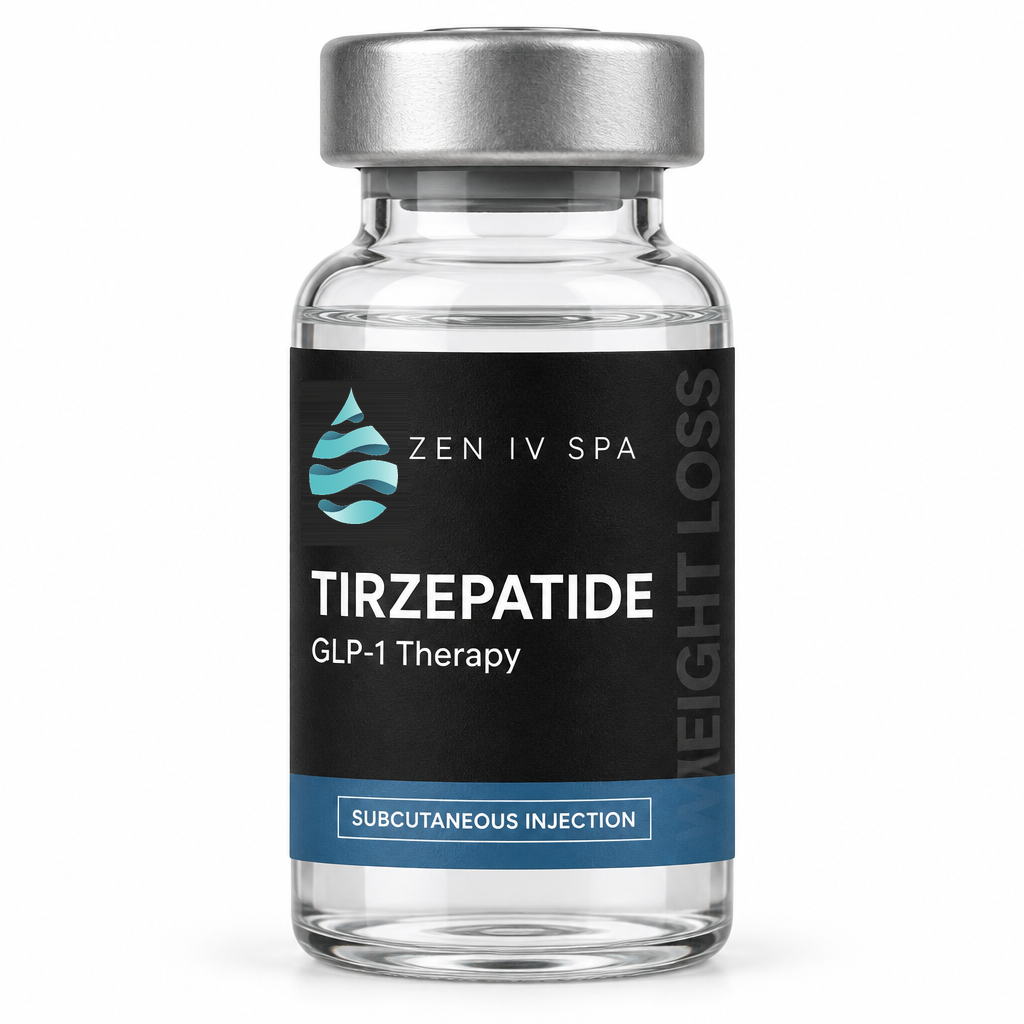
Our medical team prescribes compounded tirzepatide for $299 per month. Compounded tirzepatide contains the same active ingredient as Zepbound but is prepared by a licensed compounding pharmacy, and it is not FDA-approved. Everyday prescriptions like generic metformin are available through our everyday-health program for $79 per month when they fit your plan.
Everything starts with a free video visit. A nurse comes to your home in New York or New Jersey to draw labs, including A1C, kidney function, and a metabolic panel, so we can see whether one medicine or both makes sense. Learn more at /weight-loss/.
Common Questions
Do I have to stop metformin before starting Zepbound?+
No. In the clinical trials, people continued metformin. Your prescriber may adjust the dose later if your blood sugar improves a lot.
Will the two together cause low blood sugar?+
Rarely, unless you also take insulin or a sulfonylurea. Watch for shakiness, sweating, or confusion and keep a fast sugar source nearby.
Does metformin add more weight loss on top of Zepbound?+
Only a little. Metformin's weight effect is small. Its main value is blood sugar control and insulin sensitivity.
Should I take metformin at the same time as my shot?+
Timing does not matter for interaction. Take metformin with meals as prescribed, and take the shot on the same day each week.
Can I take compounded tirzepatide with metformin?+
Yes, the same principles apply. Just be aware compounded products are not FDA-approved, and tell your prescriber about every medicine you take.
Sources: FDA prescribing information for Zepbound (2024) and metformin; SURMOUNT-2 trial, The Lancet 2023; SURPASS-2 trial, NEJM 2021; Diabetes Prevention Program, NEJM 2002.
All treatments are medical services. Every guest is screened, and every treatment is prescribed by a licensed provider. Nothing on this page is medical advice for you personally, and the opinions summarized here belong to the doctors named, not to Zen IV Spa. Talk to a provider before starting or stopping anything.