Why it matters
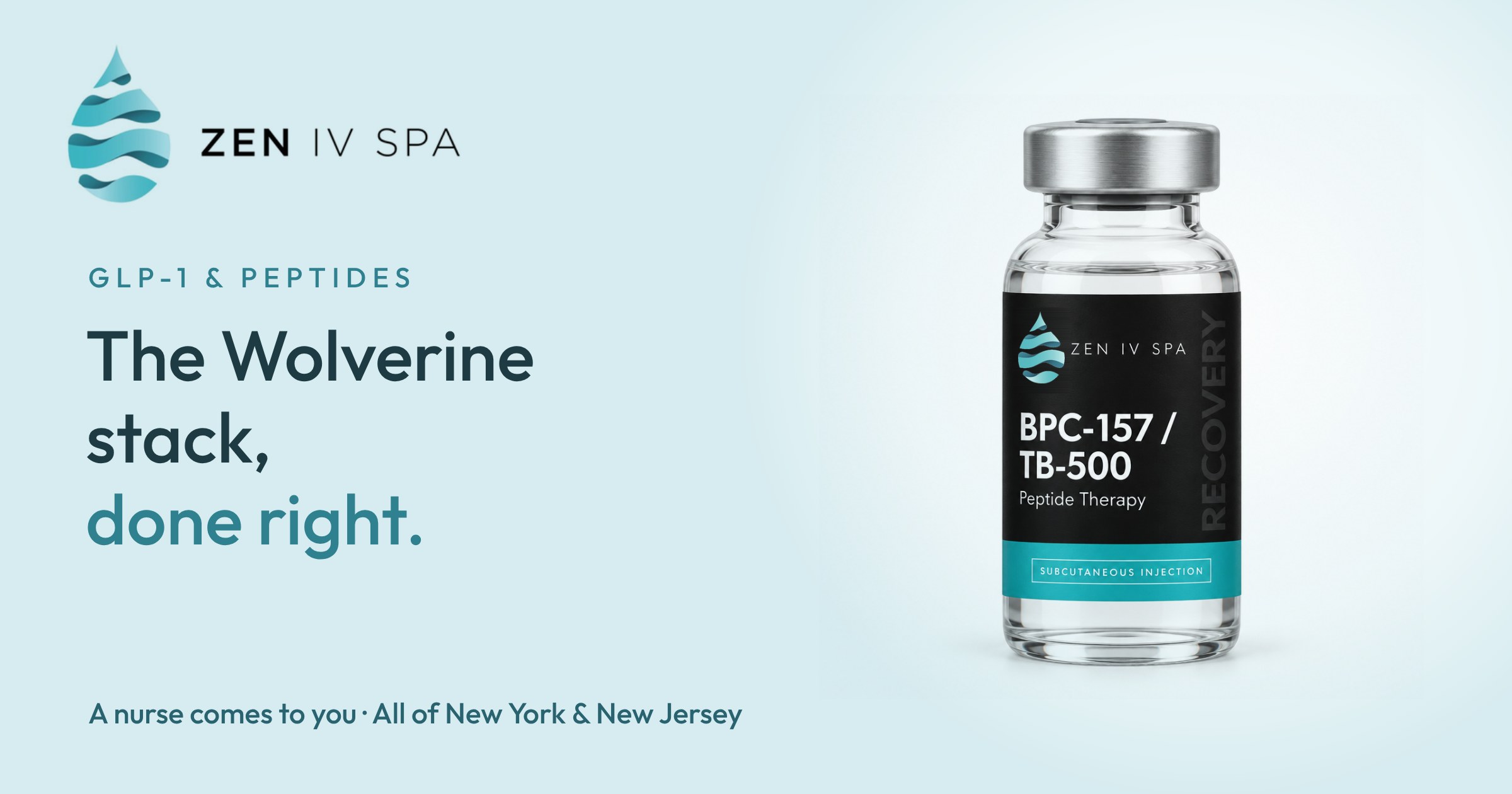
This guide covers when BPC-157 and TB-500 may be appropriate, how a medically supervised protocol differs from doing it yourself, and why clinical oversight matters far more than where a peptide is bought.
Is the Wolverine stack right for you?
The stack is promoted as a healing solution, but it does not fit every injury.
The most likely candidates:
- People with soft-tissue injuries of the tendons, ligaments or muscles
- Patients recovering from surgery
- Athletes following a structured rehabilitation program
- People who want added recovery support alongside traditional therapy
The key word is "alongside." Peptide therapy does not replace the work of rebuilding strength and function. That is why it is so often recommended as a complement to physical therapy and rehabilitation.
When it may be best to avoid it:
- Bone fractures, which often need a different healing strategy than soft-tissue injuries
- People taking immunosuppressant medications
- Active systemic infections
- Autoimmune disorders
- Poorly controlled metabolic conditions
- Pregnancy and nursing, because there is not enough safety evidence
A patient can safely proceed only after a full medical evaluation and a thorough review of the diagnosis and medical history.
The last thing to do is use peptides as a quick bandage that masks pain while the real problem goes untreated. Guessing your way through an injury usually backfires. Peptides are helpers. They cannot rewrite biology, and some conditions need their own specific medical treatment. An accurate diagnosis and a complete treatment plan are still the only way to make sure your body gets what it needs to heal.
Recovery time also varies greatly from person to person. A friend who saw results in a few weeks does not predict your result. The injury and the treatment plan both shape how long progress takes.
BPC-157: how it works, the evidence, and how it is used
BPC-157 is a synthetic peptide based on a naturally occurring protective compound found in the stomach. Research shows it holds a lot of potential for regulating painful inflammation, triggering cell migration and repairing tissue. It also assists with angiogenesis, the growth of new blood vessels that carry fresh oxygen to a healing injury.
Its versatility is one of the main reasons it is popular. Preclinical studies have explored its effects on the gastrointestinal tract, muscles, ligaments, tendons and nerves. These tissues can be slow to recover, especially where blood flow is limited.
The human data is still limited. Most of the research comes from laboratory studies and animal models, not large clinical trials. BPC-157 is getting more attention from doctors, but it is not approved by the FDA, and open questions about long-term effects need more study.
In a clinical protocol, BPC-157 is customized to the patient's medical history, current health and recovery goals. It is given as an injection under the skin, in cycles of weeks on followed by weeks off, set for each patient. Blood tests such as a complete blood count and a metabolic panel are repeated to check safety, and changes in mobility, function and pain are used to track progress.
How long does it take? Be cautious of anyone who promises a fixed timeline. Some patients report noticeable improvement in pain, mobility and function within 2 to 4 weeks. Others take up to 12 weeks or longer to see measurable progress.
TB-500 (thymosin beta-4): how it works, the evidence, and how it is used
Thymosin beta-4 is a naturally occurring protein that aids tissue repair throughout the body. TB-500 is a synthetic peptide derived from it. Healing involves several biological processes, and TB-500 can act on all of them, unlike recovery treatments that target one area. Preclinical research suggests it may support recovery by promoting angiogenesis, encouraging cell migration, assisting tissue remodeling and helping regulate inflammation.
It has also been studied in muscle regeneration, wound healing, nerve regeneration and heart repair. As with BPC-157, the data is limited. Most of it comes from animal and laboratory research, and more study is needed on safety and long-term effects.
A TB-500 protocol is built around the patient's injuries, medical history and recovery goals. Injections are usually weekly or every other week, in cycles of 8 to 12 weeks on followed by 4 to 8 weeks off. Individual plans vary. Symptoms, function, mobility and periodic tests are followed the same way as with BPC-157.
How soon does it start working? Changes at the tissue level can take 6 to 12 weeks or more. Some people say they feel better after 2 to 4 weeks. This is why the two peptides are often given together. The combination may support complementary recovery pathways and enhance the body's natural healing from several angles.
DIY vs. a medically supervised protocol
| DIY | Medically supervised | |
|---|---|---|
| Diagnosis | Self-diagnosed | Diagnosis confirmed, imaging reviewed |
| Safety checks | None | Drug interactions checked, baseline blood work |
| Plan | Copied from the internet | Set for your injury, goals, history and lifestyle |
| Follow-up | None | Mobility, pain, labs and follow-up scans tracked |
| If something goes wrong | You are on your own | Treatment adjusted or paused quickly |
| Source | Unknown | Prescription-grade, lab-verified |
| Accountability | None | A licensed provider answers for your care |
How a clinical consultation works
It starts with your recovery story and long-term goals: how the injury happened, what you have already tried, and how it affects daily life. Fitness goals and lifestyle demands are part of it.
Next comes candidacy. Some people do much better with physical therapy or conventional rehabilitation. Others are a strong fit for a peptide protocol. Deciding usually means going through medical records and imaging. A licensed provider's goal is not to put every person on peptides. It is to find an approach that is safe and fits your situation.
If peptide therapy fits, you receive a plan with a schedule and follow-up visits. The first follow-up is usually within 4 to 6 weeks, then every 8 to 12 weeks as recovery moves along.
Safety, monitoring and what to expect
Most people tolerate BPC-157 and TB-500 very well. Side effects, when they happen, are usually mild: a headache, nausea, fatigue, or brief irritation where the injection was given. Serious complications appear to be rare, but long-term safety data in humans is still lacking.
Monitoring is a critical part of treatment. Providers often order baseline blood work and repeat it every 8 to 12 weeks, and they track pain, mobility and day-to-day function. Imaging may be used to check healing.
Healing is not the same for everyone. Some people who do everything right still need more than 4 to 8 weeks to see a real change. The plan may be changed or stopped if it is not working by weeks 8 to 12, if a new medical condition appears, or if side effects become bothersome.
With physical therapy and rehab
The Wolverine stack is not a one-size-fits-all approach. It almost always gives better results when combined with structured physical therapy, quality sleep, proper nutrition and a gradual return to activity.
Be honest with your provider about symptoms and progress so the plan can be adjusted. This matters most for torn tendons and ligaments, which get little blood flow and heal slowly. Used with clinical oversight, peptides can enhance the recovery window. Loading still has to be progressive, so healing tissue is not overstressed and the risk of reinjury stays low.
Peptide therapy with Zen IV Spa
A licensed provider reviews your injury, health history and goals before anything is prescribed. If peptides fit, they are prepared by a licensed compounding pharmacy on a prescription and shipped to you, and a nurse can come for the first dose if you want. We serve all of New York & New Jersey, and our medical director oversees every treatment.
See Peptides. Related reading: BPC-157 and TB-500: What We Actually Know About the "Wolverine Stack"; Peptide Therapy and FDA Approval.
Quick answers
How long does the Wolverine stack take to work? It usually takes at least 6 to 12 weeks to see meaningful progress. Some patients report significant improvement within 2 to 4 weeks.
Can I use it alongside TRT or other therapies? Yes, it can be used with other treatments such as TRT and physical therapy. Your provider must agree first, to make sure the combination is safe and does not interfere with your recovery goals.
What if I don't see results in 3 months? Tell your provider. The plan may need adjusting, or another treatment may be worth exploring.
Is it legal? That depends on the peptides used, where they come from, and whether they are prescribed and given under the applicable rules. Going through a licensed provider means your plan is medically supervised and legal from start to finish.
Does insurance cover it? Coverage depends on the terms of your plan, and your insurer can tell you what applies. We do not bill insurance.
Can I stack it with other peptides? Stacking several peptides is safe for some patients, but your physician has to approve it. Unintended interactions can slow recovery and reduce the benefit.
What if I have an autoimmune disease? It does not always rule out peptide therapy. This is where clinical oversight matters. A provider can use your medical history and testing to decide whether it is appropriate for you.
Wondering whether peptides fit your recovery? Use "Ask a Provider" at zenivspa.com/peptides/.
Sources: the three research links in ConciergeMD's post — pubmed.ncbi.nlm.nih.gov/41898733 (BPC-157), mdpi.com/1424-8247/18/2/185 (BPC-157 review, Pharmaceuticals) and pmc.ncbi.nlm.nih.gov/articles/PMC12753158 (thymosin beta-4). Educational content, not medical advice.
Ready to book?
Call or text (332) 239-2005, or book online. A licensed nurse comes to you anywhere in all of New York & New Jersey, 8 AM to 11 PM, seven days a week.
All treatments are medical services. Every guest is screened, and every treatment is provided only under the clearance, prescription or standing protocol of a licensed medical provider. Compounded peptides are not FDA-approved unless stated. Nothing on this page is a diagnosis or a promise of results.