First things first
Same thing? Almost. Think of it as one person with a last name and two outfits. Here is the whole story, start to finish.
NAD is the last name
NAD stands for nicotinamide adenine dinucleotide. Say it once for fun, then never again. It is a molecule made of two smaller pieces, nicotinamide (a form of vitamin B3) and adenine, joined by phosphate. It lives in every living cell on Earth, from yeast to you. It was first described in 1906 by two British scientists studying fermentation, and its real job was worked out in the 1930s and 40s.
When someone says "NAD therapy," "NAD drip" or "NAD levels," they mean the whole family. NAD is the umbrella.
How your cells make energy (the bucket brigade)
Your cells turn food into ATP, the energy your body actually spends on walking, thinking and arguing about the Knicks. They do it with a chain of hand-offs called redox reactions: one molecule gives up electrons (gets oxidized), another takes them (gets reduced). Think of a bucket brigade passing water to a fire.
NAD is the bucket. It has two states.
NAD+ is the empty bucket
NAD+ is the oxidized form. The plus sign means it is ready to accept. It walks up to the food you ate, during steps your biology teacher called glycolysis and the citric acid cycle, and picks up a load: two electrons and a hydrogen.
NADH is the full bucket
Once NAD+ has its load it gets a new name: NADH. The reduced form. Full bucket. NADH carries those high-energy electrons to the electron transport chain, the power plant inside the mitochondria, dumps them, and the plant uses them to make ATP. NADH walks away empty, as NAD+, and goes back for more.
One molecule. Two states. Round and round, thousands of times a day, in every cell you own. Scientists call it the NAD+/NADH cycle, and it is the single most important hand-off in your metabolism. That is the whole difference between NAD+ and NADH: empty or full.
So why is NAD+ the famous one?
Because NAD+ has a second job, and it is the job the longevity podcasts are excited about.
Besides carrying electrons, NAD+ is the fuel for the repair crews:
- Sirtuins manage how cells age, how they respond to stress, and how genes get switched on and off.
- PARPs find and fix broken DNA.
- CD38 and other enzymes use NAD+ for signaling, including calcium signaling inside cells.
Here is the catch: unlike the bucket brigade, which recycles NAD+ endlessly, these repair crews use NAD+ up. They break it apart. So the more repair your body needs, the faster NAD+ disappears.
Why NAD+ levels fall
Levels drop with age, by roughly half between young adulthood and old age in some tissues. They drop faster with heavy drinking (alcohol processing burns NAD+ at a huge rate), poor sleep, long stress, illness, inflammation and too much sun. Low NAD+ is linked in research to aging itself and to metabolic, heart and brain conditions, though "linked to" is not "causes," and that is an honest line researchers are still drawing.
This is why NAD+ therapy, whatever the form, is aimed at the empty-bucket side of the pair. Raise NAD+ and, in theory, you feed both the power plant and the repair crews.
Pill or drip? The full honest version
Pills. NAD+ itself mostly breaks apart in the stomach before it can be absorbed. So most "NAD pills" are not NAD+ at all. They are building blocks, usually NMN (nicotinamide mononucleotide) or NR (nicotinamide riboside), that your body assembles into NAD+ over days and weeks. Plain old niacin (vitamin B3) is a building block too. Pills are slow, steady, cheap and daily. Several small human trials show NR and NMN do raise NAD+ in the blood.
Shots. A smaller amount of NAD+ under the skin or into the muscle, ten minutes, often weekly. In between a pill and a drip.
Drips. NAD+ goes into the bloodstream directly, skipping the stomach and the assembly step. Blood levels rise during the session. One small human study tracked NAD+ in the blood during an infusion and found levels climbed and then settled over the hours after. The trade-offs: it has to go in slowly (one to four hours, or you feel a warm, tight-chest wave), a licensed nurse has to be in the room, and not every molecule infused ends up inside a cell. "100% absorption" is a sales line, not a study.
Both routes raise NAD+. Neither has been proven in a large trial to make anyone live longer or feel dramatically different. Anyone who tells you otherwise has a bottle to sell. Many people do both: a daily pill for the long game, a drip when they want to feel something this week.
What people actually report
After drips, clients tell us: steadier energy, clearer thinking, better sleep, and for some, less pull toward sugar or alcohol. Small studies point the same direction. These are reports, not proof. Some people feel nothing much from one session and more after a short series. We tell you that up front so you book with the right expectations.
What about NADH supplements?
They exist, usually as pills for fatigue or jet lag. The research is thin and old, and NADH is unstable, so a lot of what is in the bottle may not survive to your bloodstream. We do not sell it. If you are choosing, the NAD+ side of the pair has far more research behind it.
At Zen IV Spa
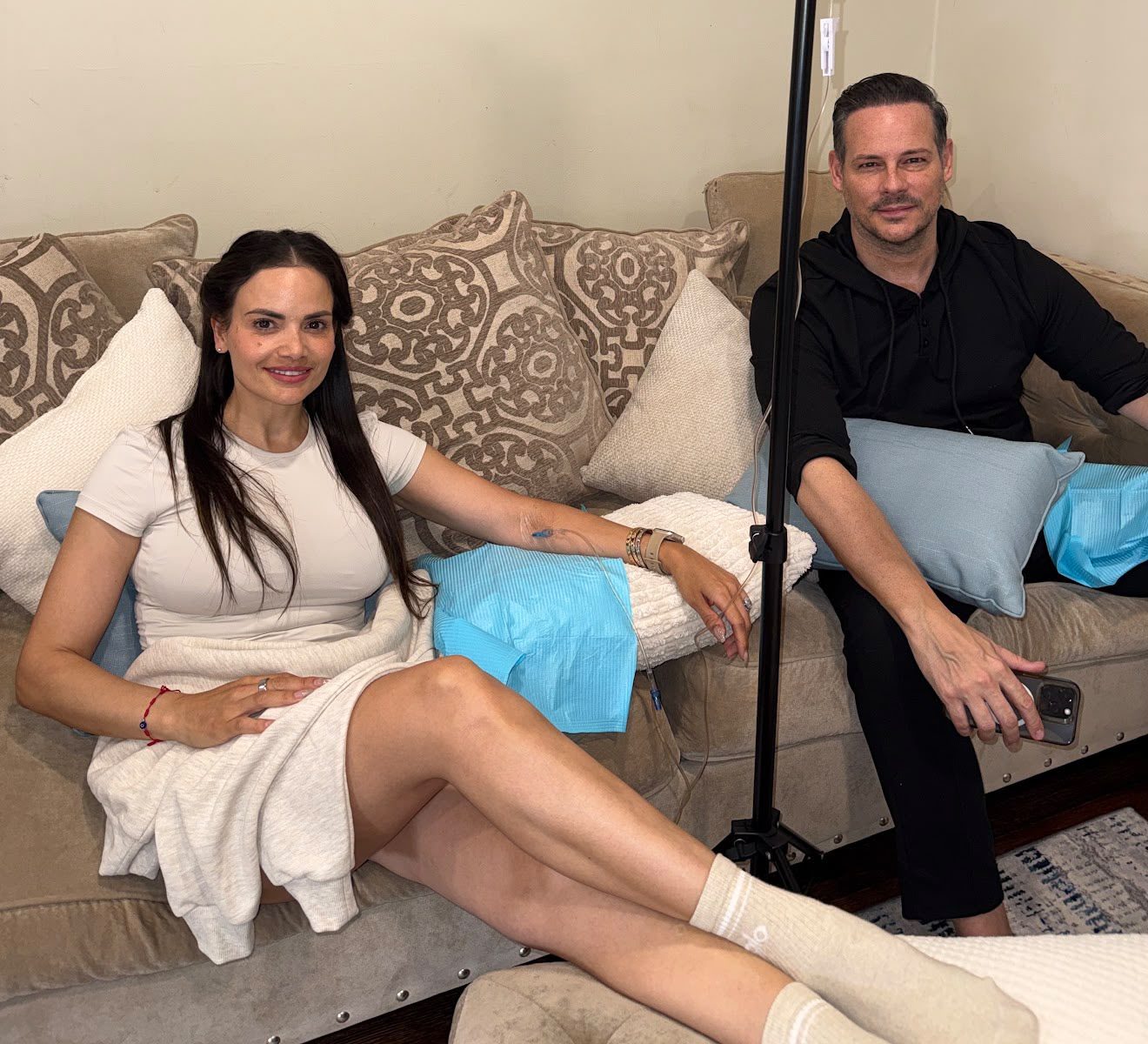
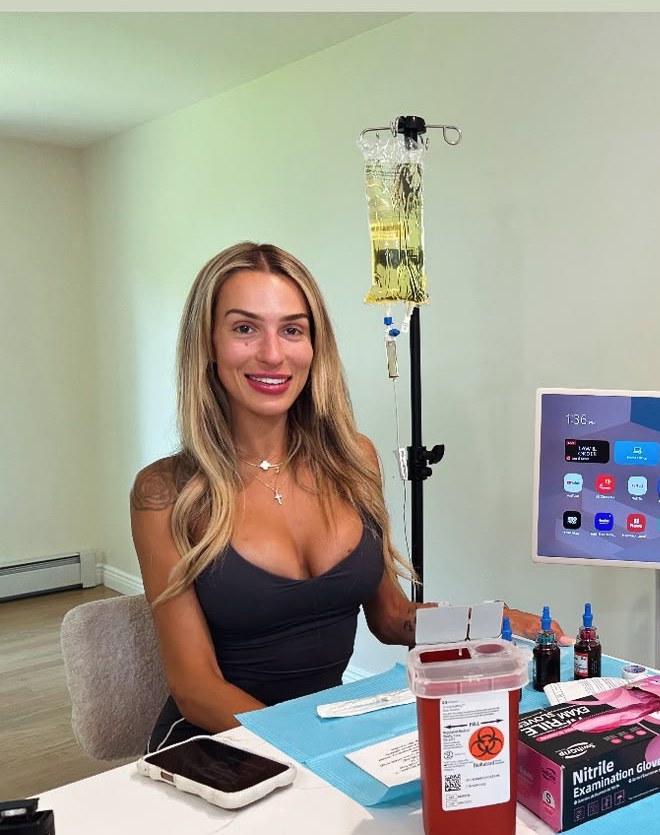
NAD+ drips come in 250, 500 or 1,000 mg. A licensed nurse gives them at your home, hotel or office anywhere in New York and New Jersey, 8 AM to 11 PM, and stays for the whole drip. A licensed provider reviews your health history on a short video call first. NAD+ injections can also be shipped to you after that call, with a nurse for the first one if you want. Our medical director oversees every treatment.
Quick answers
Is NAD the same as NAD+? NAD is the family name. NAD+ is the empty, electron-accepting form. In everyday use people say NAD to mean NAD+.
Is NADH better than NAD+? No. NADH is just NAD+ carrying a load. Your body makes it from NAD+ constantly. NAD+ is the form used in therapy and the form with the research.
Which one is in the drip? NAD+.
Do NAD pills work? NR and NMN raise blood NAD+ in small trials. They are slower than a drip and need daily use.
How long does an NAD+ drip take? One to four hours. Faster makes you feel sick, so the nurse sets the speed.
Want the empty-bucket version, delivered? Book NAD+ at zenivspa.com.
Sources: Berg, Tymoczko & Stryer, Biochemistry (NAD+/NADH in glycolysis, the citric acid cycle and the electron transport chain); Cantó, Menzies & Auwerx, Cell Metabolism 2015 (NAD+ metabolism review); Rajman, Chwalek & Sinclair, Cell Metabolism 2018 (NAD+ boosters, NR and NMN); Yoshino, Baur & Imai, Cell Metabolism 2018 (NAD+ intermediates); Grant et al., Frontiers in Aging Neuroscience 2019 (NAD+ infusion, blood levels over time, pilot); Martens et al., Nature Communications 2018 (NR raises NAD+ in healthy adults); Harvard Health, NAD+ and aging; NIH Office of Dietary Supplements, Niacin Fact Sheet. Educational content, not medical advice.
Ready to book?
Call or text (332) 239-2005, or book online. A licensed nurse comes to you anywhere in all of New York & New Jersey, 8 AM to 11 PM, seven days a week.
All treatments are medical services. Every guest is screened, and every treatment is provided only under the clearance, prescription or standing protocol of a licensed medical provider. Compounded peptides are not FDA-approved unless stated. Nothing on this page is a diagnosis or a promise of results.