First things first
Now the interesting part. Because there is an interesting part, and it deserves more than a headline. Grab a coffee. This is the long version.
Why everyone keeps asking
Diabetes is everywhere. The CDC's National Diabetes Statistics Report counts more than 38 million Americans with diabetes, about 11% of the country. Around 1 in 5 of them do not know it yet. Roughly 1 in 3 adults, close to 98 million people, has prediabetes, which is the body's polite way of saying "we need to talk." Diabetes also raises the risk of heart disease, kidney disease, nerve damage and vision loss, and people with diabetes got sicker from COVID-19 than people without it.
In New York and New Jersey that is millions of neighbours. So when a molecule shows up with the words "blood sugar" anywhere near it, phones light up. Fair enough. Let's look.
First, a two-minute diabetes refresher
Your body runs on glucose (sugar) from food. Insulin is the key that lets glucose out of the blood and into your cells. In type 1 diabetes the body stops making insulin, usually from a young age. In type 2, which is about 90% of cases, the body still makes insulin but the cells stop answering the door. Doctors call that insulin resistance. Glucose piles up in the blood, and high blood sugar over years is what does the damage.
The main causes of type 2 are extra body weight, especially around the middle, not moving much, family history, age, and some ethnic backgrounds carrying higher risk. Diet matters, but "a high-fat diet" on its own is not the cause; it is one piece.
Meet NAD+, the molecule with a thousand jobs
Picture a tiny worker that every cell in your body hires to turn breakfast into energy and to patch up damage overnight. That is NAD+ (nicotinamide adenine dinucleotide). It was discovered in 1906 and its job worked out over the next few decades. You cannot live without it.
What NAD+ actually does, in plain words:
- Turns food into energy. It carries electrons from the food you ate to the part of the cell that makes ATP, the energy your body spends.
- Powers the repair crews. Enzymes called sirtuins and PARPs fix DNA and manage how cells age. They burn NAD+ to do it.
- Helps switch genes on and off, including genes tied to metabolism and stress.
- Keeps the mitochondria (the cell's power plants) working.
Now the hook: NAD+ sits right in the middle of how your body handles sugar and fat. And in lab and animal studies, NAD+ levels drop in the tissues hit by type 2 diabetes, the liver, the muscle, the fat. Less NAD+, more trouble handling glucose. When researchers gave diabetic mice a NAD+ building block, the mice handled glucose better and their insulin sensitivity improved. Cue the headlines.
Okay, but what about humans?
This is where we slow down, because the human research is small and mixed. Here is all of it that matters.
1. One encouraging study. In 2021, researchers at Washington University gave NMN (a building block your body turns into NAD+) to women with prediabetes for ten weeks. Their muscles responded better to insulin. That is a real, measurable result. It is also 25 women, ten weeks, and no change in blood sugar itself or in body weight.
2. Two shrugs. Trials of NR (another NAD+ building block) in overweight and obese adults raised NAD+ in the blood, which proves the pill works as a pill, but did not change insulin sensitivity, blood sugar or liver fat. The body said "thanks for the NAD+" and kept its sugar exactly where it was.
3. Zero drip studies. Nobody has run a trial of NAD+ drips in people with diabetes. The thing people are asking about has not been studied for the thing they are asking about.
So: one green light, two yellow lights, one empty road. That is the research. Anyone who tells you NAD+ "has been shown to restore normal blood sugar" is quoting a mouse.
Why the mouse results may not carry over
Mice are not small people. They live short lives, they are kept on lab diets, and the amounts used are far bigger, for their size, than what a person gets. Plenty of things that cure mice do nothing for humans. That is not a knock on the research; it is why the human trials matter and why we wait for them.
Drip vs. pill, for this question
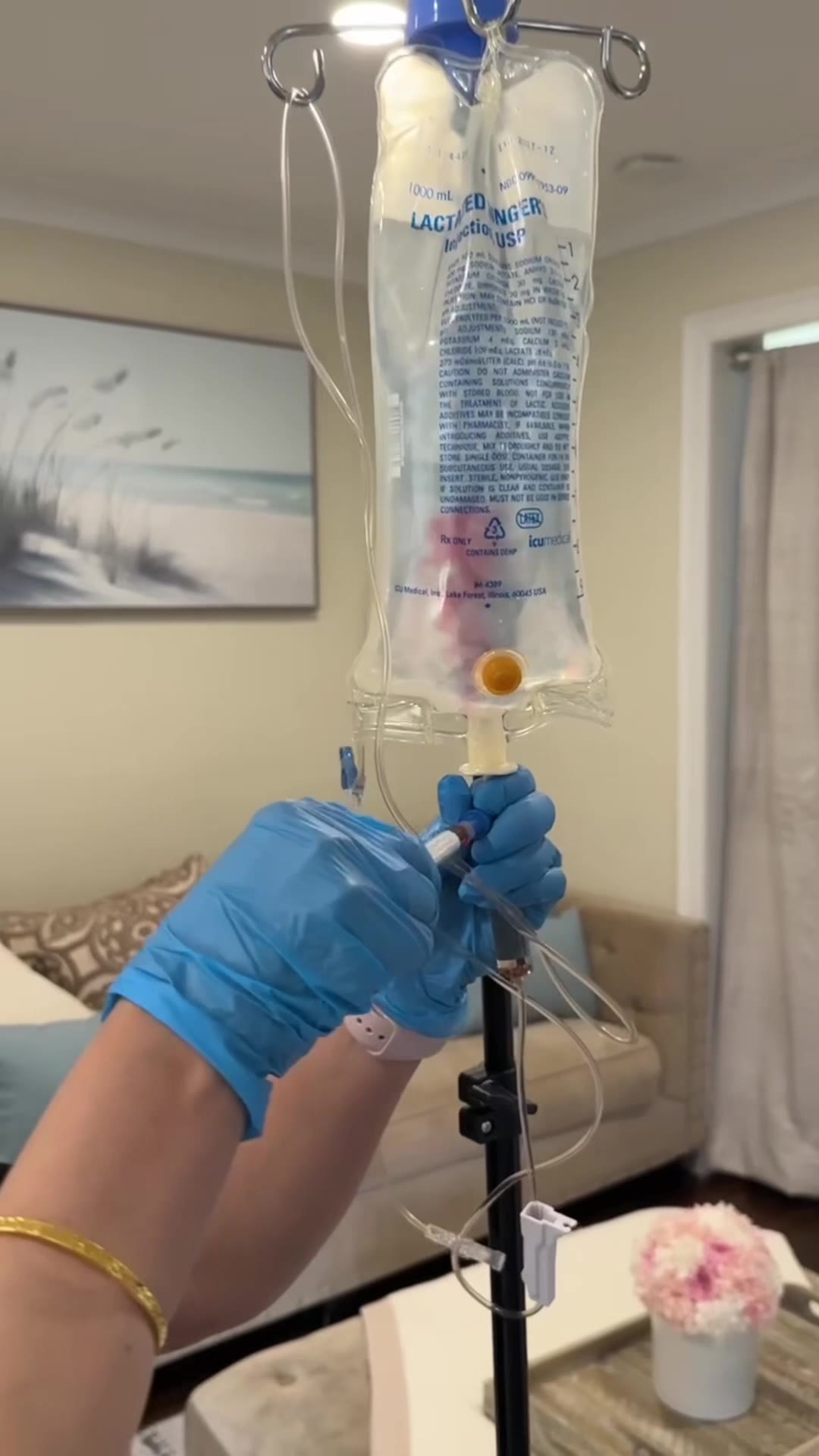
A pill (NMN or NR) is a building block your body assembles into NAD+ over weeks. A drip puts NAD+ itself into the bloodstream and blood levels rise during the session. For energy and recovery, that difference matters to people. For diabetes, it does not change the answer, because neither route has been shown to treat it. Faster delivery of something that has not been proven to work is still not a treatment.
What to do if you have diabetes and want NAD+
Keep your medication. Keep your doctor. NAD+ replaces neither.
If you want NAD+ for the reasons people usually want it (energy, recovery, the long game on healthy aging), you can, with three house rules:
- Tell the provider you have diabetes on the video call before your first drip. Not at the door, not halfway through.
- Keep your own doctor in the loop. Blood sugar can move during any infusion, and the nurse wants to know what "normal" looks like for you.
- Eat before your drip and bring your meter if you use one. The nurse will ask.
People on insulin or on medications that can drop blood sugar should have this conversation with their doctor before booking anything.
What NAD+ might honestly do for you
Outside the diabetes question, the things clients tell us after NAD+ drips: steadier energy, clearer thinking, better sleep, less craving for sugar or alcohol. We say "tell us" on purpose. Those are reports and small studies, not large trials. If that is what you are after, NAD+ is worth a conversation. If what you are after is lower blood sugar, that conversation is with your doctor, and it is about food, movement, sleep and medication.
Our line, in one breath
NAD+ is being studied for metabolic health. It has not been shown to treat diabetes. We will say the first part out loud and never pretend the second. A licensed provider reviews your health history before any NAD+ drip, a licensed nurse checks your blood pressure and pulse at your door and stays the whole time, and our medical director oversees every treatment, anywhere in New York and New Jersey, 8 AM to 11 PM.
Quick answers
Can NAD+ cure diabetes? No. Nothing on the market cures diabetes. NAD+ is not a treatment for it.
Can I get an NAD+ drip if I have diabetes? Often yes, after the provider reviews your history. Tell them on the call and keep your doctor informed.
Does NAD+ lower blood sugar? Not in any human trial so far. One small study improved insulin sensitivity in muscle; others found no change.
Is NAD+ safe with metformin or insulin? Ask your doctor and tell our provider. There is no large safety study of the combination.
How long does an NAD+ drip take? One to four hours, because it has to go in slowly. Options are 250, 500 or 1,000 mg.
Got a question about NAD+ and your health? Use "Ask a Provider" at zenivspa.com before you book. That is what it is there for.
Sources: CDC, National Diabetes Statistics Report; CDC, Diabetes Basics; Yoshino et al., Science 2021 (NMN and muscle insulin sensitivity in prediabetic women, pilot); Dollerup et al., American Journal of Clinical Nutrition 2018 (NR in obese men: NAD+ up, no change in insulin sensitivity); Yoshino et al., Cell Metabolism 2011 (NMN in diabetic mice); Cantó, Menzies & Auwerx, Cell Metabolism 2015 (NAD+ metabolism review); Harvard Health, NAD+ and aging. Educational content, not medical advice.
Ready to book?
Call or text (332) 239-2005, or book online. A licensed nurse comes to you anywhere in all of New York & New Jersey, 8 AM to 11 PM, seven days a week.
All treatments are medical services. Every guest is screened, and every treatment is provided only under the clearance, prescription or standing protocol of a licensed medical provider. Compounded peptides are not FDA-approved unless stated. Nothing on this page is a diagnosis or a promise of results.