What iron does
Iron is needed to make hemoglobin, the protein in red blood cells that carries oxygen. It is also used by muscle and by enzymes that produce energy. When iron runs low, the body first uses up its stores. Hemoglobin falls later. So a person can be iron deficient and symptomatic for months before a standard blood count shows anemia.
Signs of low iron
- Tiredness that rest does not fix
- Shortness of breath on stairs or with exercise
- Pale skin, cold hands and feet
- Headaches, dizziness, poor concentration
- Restless legs, especially at night
- Hair shedding and brittle nails
- A craving for ice or other non-food items
These overlap with many other conditions. The diagnosis is made with a blood test.
Common causes
- Heavy menstrual periods, the leading cause in younger women
- Pregnancy
- Blood loss from the gut, which must be ruled out in men and in women after menopause
- Poor absorption: celiac disease, inflammatory bowel disease, weight-loss surgery, long-term acid-reducing medication
- Low intake, particularly in vegetarian and vegan diets
- Frequent blood donation
- Endurance training
- Chronic kidney disease and heart failure
Finding the cause matters as much as replacing the iron. Unexplained iron deficiency in an adult needs evaluation by a doctor.
The tests that come first
No one should receive iron without blood work. The key tests are:
- Ferritin, the measure of iron stores. Low ferritin confirms deficiency. Ferritin also rises with inflammation, so a normal result can be misleading in someone with a chronic illness.
- Transferrin saturation, which shows how much iron is available in the blood.
- Hemoglobin and a complete blood count, to see whether anemia has developed.
Too much iron is harmful, so an infusion is given only when tests show a need.
Pills or infusion?
| Iron tablets | Iron infusion | |
|---|---|---|
| First choice for | Most people with iron deficiency | People who cannot take or absorb tablets, or need faster correction |
| How fast | Months to refill stores | Stores are replaced in one or two visits |
| Side effects | Constipation, nausea, stomach pain, dark stools; common | Usually mild; see below |
| Absorption | Limited; reduced by food, coffee, tea and antacids | Bypasses the gut entirely |
| Cost | Low | Higher |
Guidelines recommend an infusion when:
- Tablets cause side effects you cannot tolerate
- Tablets were taken properly and levels did not rise
- A gut condition or surgery limits absorption
- Blood loss is ongoing and faster than tablets can replace
- Iron is needed quickly, such as in later pregnancy or before surgery
- You have chronic kidney disease, heart failure or inflammatory bowel disease
What the first visit is like
- Before the visit. A licensed provider reviews your blood results, medical history, medications and any past reactions, and writes an order for a specific iron product and amount.
- On the day. Eat normally and drink water. No fasting is needed.
- Checks. The nurse records your blood pressure, pulse and oxygen level.
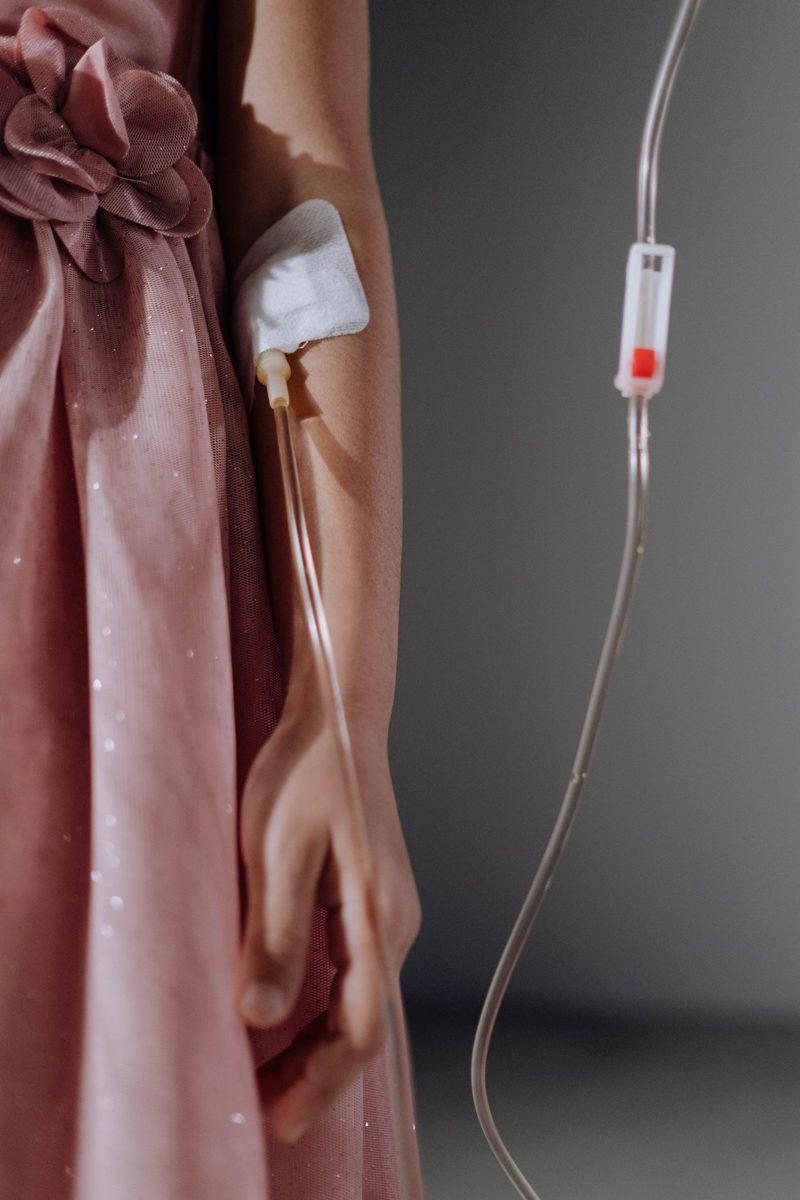
- The IV. A small catheter is placed in a vein in your arm.
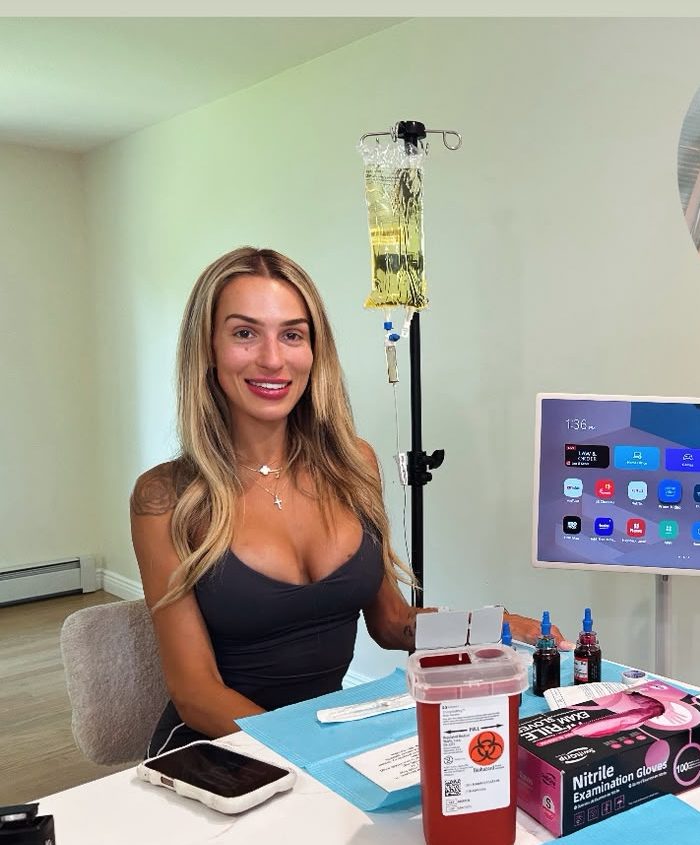
- The infusion. Depending on the product, it runs for about 15 minutes to a few hours. The nurse stays and checks on you throughout.
- Observation. You are watched for about 30 minutes after it ends.
- Afterward. Most people return to normal activity the same day.
Several iron products are in use. Some deliver a full course in one or two visits, and others are given as a series of smaller amounts. The provider chooses based on your results and history.
Side effects
Common and mild: a metallic taste, headache, nausea, dizziness, muscle or joint aches, and flushing. Some people feel flu-like for a day or two afterward.
At the IV site: if iron leaks out of the vein, it can leave a brown stain on the skin that may be long-lasting. Tell the nurse at once if you feel burning, pain or swelling at the site.
Serious allergic reactions are rare with modern iron products. They are the reason every infusion is given by a licensed nurse with emergency medication on hand, and the reason for the observation period.
Low phosphate can occur after some iron products, particularly with repeated courses. Your provider may check a phosphate level if you develop new fatigue, muscle weakness or bone pain in the weeks after.
Tell the provider if you have had a reaction to iron before, have asthma or multiple drug allergies, are in the first trimester of pregnancy, or have an active infection.
How soon you will feel it
Iron goes into storage first, and the bone marrow then uses it to build new red blood cells. Hemoglobin begins to rise within one to two weeks. Many people notice more energy in two to four weeks, and the full effect takes six to eight weeks. Ferritin spikes right after an infusion, so repeat blood work is done at least four weeks later, and usually at eight to twelve weeks, to get an accurate reading.
Is an iron infusion a wellness drip?
No. An iron infusion is a medical treatment for a diagnosed deficiency. It requires blood tests, a provider's order and monitoring. It is not something to add for a general energy lift.
At Zen IV Spa
A licensed nurse can draw your iron studies at home anywhere in New York & New Jersey. A licensed provider reviews the results with you on video, and if an infusion is appropriate, writes the order. The infusion is given by a licensed nurse who stays for the whole visit. We share results with your own doctor at your request, and we will tell you if your results call for further evaluation. Our medical director oversees every treatment.
Quick answers
How do I know if I need an iron infusion? A blood test showing low ferritin, plus a reason tablets are not suitable. A provider decides.
How long does it take? From about 15 minutes to a few hours, plus 30 minutes of observation, depending on the product.
Does it hurt? There is a pinch when the IV goes in. The infusion itself should not hurt. Report any burning at the site.
How long does it last? Months to years, depending on the cause. If blood loss continues, levels will fall again.
Can I get one while pregnant? Iron infusions are used in the second and third trimesters when needed. Your obstetric provider should be involved.
Is it better than tablets? It is faster and avoids stomach side effects. Tablets remain the first choice for most people.
Can I have too much iron? Yes. That is why testing comes first and afterward.
Tired and wondering about iron? Start with a blood draw at home: zenivspa.com/labs-testing/.
Sources: American Society of Hematology, Iron-Deficiency Anemia; Weyand et al., JAMA 2023 (prevalence of iron deficiency in US females aged 12 to 21) and CDC NHANES data on iron deficiency; Pasricha et al., The Lancet 2021 (iron deficiency); DeLoughery et al., American Gastroenterological Association Clinical Practice Update on Management of Iron Deficiency Anemia, 2024; Auerbach & Adamson, American Journal of Hematology 2016 (how we diagnose and treat iron deficiency anemia); FDA prescribing information for intravenous iron products; Wolf et al., JAMA 2020 (hypophosphatemia after intravenous iron). Educational content, not medical advice.
Ready to book?
Call or text (332) 239-2005, or book online. A licensed nurse comes to you anywhere in all of New York & New Jersey, 8 AM to 11 PM, seven days a week.
All treatments are medical services. Every guest is screened, and every treatment is provided only under the clearance, prescription or standing protocol of a licensed medical provider. Compounded peptides are not FDA-approved unless stated. Nothing on this page is a diagnosis or a promise of results.